Water filters in the modern world have long ceased to be considered a luxury item, but rather have grown into the rank of "vital". Manufacturers, realizing the increased demand for their product, are developing more and more new technologies that can significantly improve the quality of the liquid. One of such advanced methods used for water purification include ion-exchange filters. What are their benefits? Is it really this type of treatment device that can be considered ideal, in terms of reasonable cost, functionality and safety for consumer health? We know the answer.
What it is
The ion exchange filter purchased for water purification is most often used to soften it. In other words, thanks to this device, it becomes possible to break down the hardness salts in the liquid, most often supplied from centralized water pipes.
Traditionally, ion-exchange plants are classified according to the conditions of use for:
- small designs for home use, implying the presence of a replaceable cartridge;
- oversized ion-exchange columns for industrial purposes, automatically regenerating the "cleaning" substance.
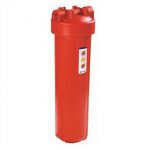
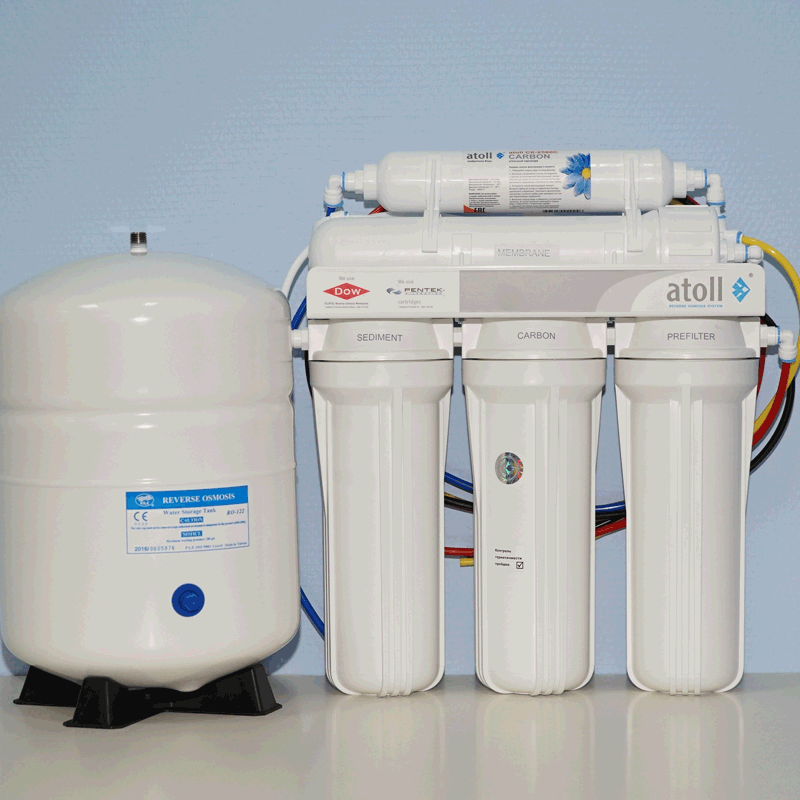
A home installation, as a rule, should consist of a body made of high-quality plastic or steel filled with “cleaning” material. The principle of its operation is based on the use of special porous inorganic granules, otherwise referred to as resins. These particles should be as saturated as possible with sodium ions.
By installing a tank filled with “charged” granules behind a primary filter located at the “entrance” to the cold water supply system, all water passing through the pipe will undergo an additional purification step. In accordance with a well-thought-out technology for softening the liquid, the ion-exchange resin, changing the chemical composition of the incoming substance, replaces the magnesium and calcium ions contained in it with sodium ions. The rate of water change in this case depends on the degree of contamination and the direct volume of fluid supplied.
It is important to note that the resulting chemical composition of water does not cause any harm to the health of the person who uses it and does not provoke the formation of scale in pipe installations.
After the period specified by the manufacturer as operational, the user will be forced to recover the resin using edible salt or citric acid. Obviously, absolute regeneration of the filter element is impossible. After an average of 1-3 years of careful use of the treatment plant and regular updates of the “charge” of granules by ions, a complete replacement of the device cartridge will be required.
In addition to the need for the buyer to carefully monitor the ion-exchange filter installed to soften the water, there are a number of other points that can cause discomfort to the user.
- Potential financial and time costs for the purchase of a replacement cartridge, as well as its installation in a water treatment system.
- The importance is not just the discharge, but the mandatory disposal of “resin pellets” after use (this item is especially important for industrial production due to the large volumes of reagent in the overall treatment plants).
- The low speed of the water filtration process, due to the "slow" release of ions by the resin (due to the low level of hydrophilicity).
Obviously, the existing disadvantages of choosing an ion-exchange filter can to some extent spoil the impression of its operation. But do not forget about the significant advantages of water purification using this method. The main ones include:
- The maximum possible degree of positive water change.It is no coincidence that ion-exchange plants are suitable for use not only at home, but also on large-scale industrial conditions.
- Moreover, in addition to water softening, such filters are able to "catch" and other contaminants that are capable of ion exchange, but different from hardness salts.
- Despite the global nature of the functionality of the ion-exchange “cleaner”, it is extremely simple to install, maintain and operate directly.
How to choose
Having understood the appropriateness of acquiring a filter, having read the above information, the buyer will most likely have a logical question related to other criteria for choosing a device. We decided to facilitate the task and gave below a list of indicators that deserve special attention and an objective assessment when analyzing the range of water treatment plants.
- Hardness of water. A condition in which ignoring the need for additional cleaning can adversely affect household appliances in the form of scale formation on functional elements. The hardness level of running water can be determined using a special substance that displays this indicator by staining the fluid being tested. The higher the stiffness, the greater the amount of calcium and magnesium ions it contains. When buying an ion-exchange filter, it is important to verify the value of the stiffness characteristic, which is “amenable” to cleaning, on average, from 4-5 mg - equiv / l.
- The initial productivity of the softening system is an indicator of the maximum volume of purified water obtained due to the functioning of the filter for 1 minute. Accordingly, the higher this indicator, the more productive the process of water change will be (on average 2.5 - 5 l / min for "home" units).
- The need for a regeneration frequency reflects the average frequency of resin recovery during regular use of the filter. This indicator, as a rule, is indicated by the manufacturer in liters of water available for treatment until the necessary regeneration. It depends directly on the initial hardness of the liquid being treated (on average 400 - 700 l before resin recovery).
- The frequency and volume of permissible drainage water are important for determining the maximum number of liters possible for a one-time treatment with the purchased device, as well as how often contaminated water is “thrown” into the cleaning mechanisms. It is logical that the larger the volume and frequency of water purification provided by the manufacturer, the better the product will be considered. However, it should be borne in mind that the high mentioned indicators affect the wear of not only a replaceable cartridge, but also other functional elements of the filter.
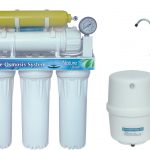
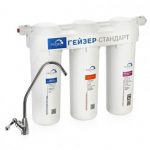
- The need for redundancy. Based on the personal need for the accumulation of purified water in a separate tank or its "exit" through a special tap, it is advisable to take into account the presence of this function in the purchased device. If you remove the processed product through a special valve it is not difficult to install the vast majority of ion-exchange filters, then the storage tank is included in the package of goods only for certain models and manufacturers.
The purchase of a water purification device is necessary for anyone who cares about the quality of drinking raw materials. Now, knowing the specific features of the ion-exchange type of filters, as well as its advantages and disadvantages that are important for taking into account, the buyer can easily decide on a product that can satisfy the basic human need for quality water.