Just 10 years ago, an SLR camera was unavailable for an amateur. And it was not only a matter of price. Most manufacturers did not consider the average layman as a potential consumer niche. Fortunately, the trend has changed over time. And today it’s even easier to find a good camera for an amateur among the “DSLRs” than among the annoyed “soap dishes”.
Content
The main differences from professional cameras
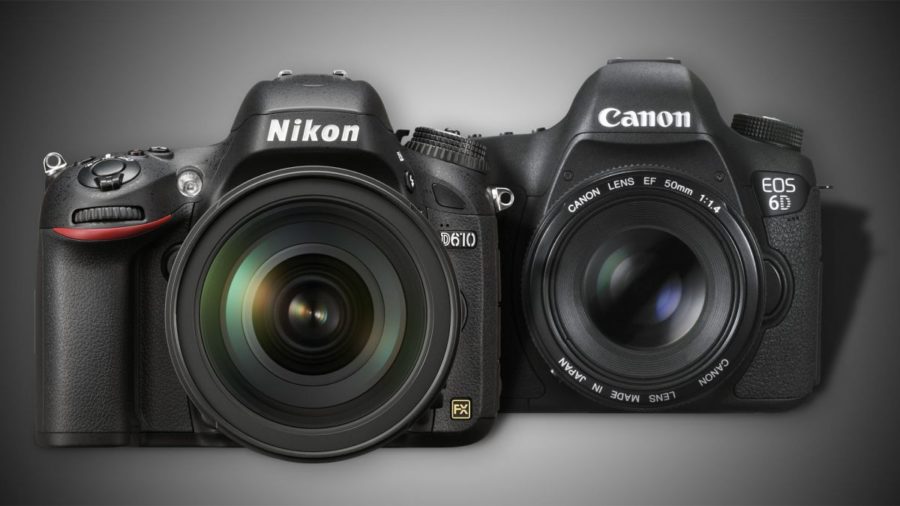
Outwardly for the average consumer, one “DSLR” is no different from another. Therefore, a reasonable question arises: what is the difference between an amateur class and a professional one. First of all, the physical size of the matrix. This is not about the advertised megapixels, but about the diagonal, measured in millimeters. Most professional cameras have a full-sized matrix. Obviously, the amateur-class camera will be inferior in this parameter.
The second important point is usability. Realizing that the amateur is not ready to perform a large number of manual settings, many manufacturers have added predefined modes and simplified the menu. But that is not all. Often, amateur SLR cameras add features designed just to attract consumers. These include transferring files via Wi-Fi, the ability to immediately upload them to social networks and shooting video. For professionals, this is all to nothing.
However, to replenish the rating of amateur cameras, this is not enough. Yet one of the indicators is still low cost. For amateur "DSLRs" it usually does not exceed 60-70 thousand rubles. And for such a price you can even buy a kit consisting of a body and a lens.
How to choose?
Unfortunately, there are no common criteria when choosing a camera for an amateur. After all, no expert knows what and how will be filmed on camera. Of course, an expert rating will help you choose the best in a particular class. However, this does not guarantee that the camera will meet consumer expectations. Then a reasonable question arises: how to choose really your camera?
First of all, you need to decide for what purpose the camera is bought. Family photographs are one thing, landscape photography is another, and reporting is the third. Of course, in each case, the requirements for the camera will be different. Next, you need to understand how much you can spend initially and how much in the future. And the last - simplicity and usability. This quality is especially important for a beginner in photography.
Surprisingly, as soon as an amateur decides which camera to buy, he becomes the best for him, and for a relatively long time he is not ready to give it up. The thing is that getting used to certain settings and camera properties, it is very difficult to “transfer” to something else in the future.
Rating 2019
Those who are only at the beginning of the path and only decides what their first camera will be can be helped by a rating based on expert opinions and consumer tests. Most online publications make it up at the beginning of the year. 2019 was no exception. Each class has its own best camera. Of course, there are some among amateur cameras. It is about them that we will discuss below.
So, in the class of SLR cameras you can note:
- Nikon D5500;
- Canon EOS 550D;
- Sony Alpha 68.
Among the top "soap dishes" we can distinguish:
- Panasonic Lumix LX7;
- Sony RX100;
- Nikon Coolpix P600.
And, of course, “mirrorless”. Today, not a single rating can do without them:
- Olympus E-PM2;
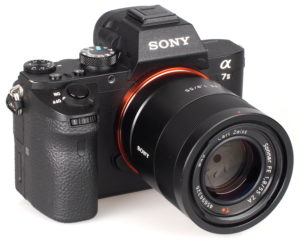
- Sony α7 II.
To appreciate the pros and cons of each, it is worth learning a little about them. But first things first.
Nikon D5500
Perhaps the Nikon D5500 is a truly amateur SLR camera.He was one of the first manufacturers to proudly call himself this class. It was with its release that it became obvious that Nikon once and for all decided to master the niche of budget and amateur cameras. So what is so remarkable about him?
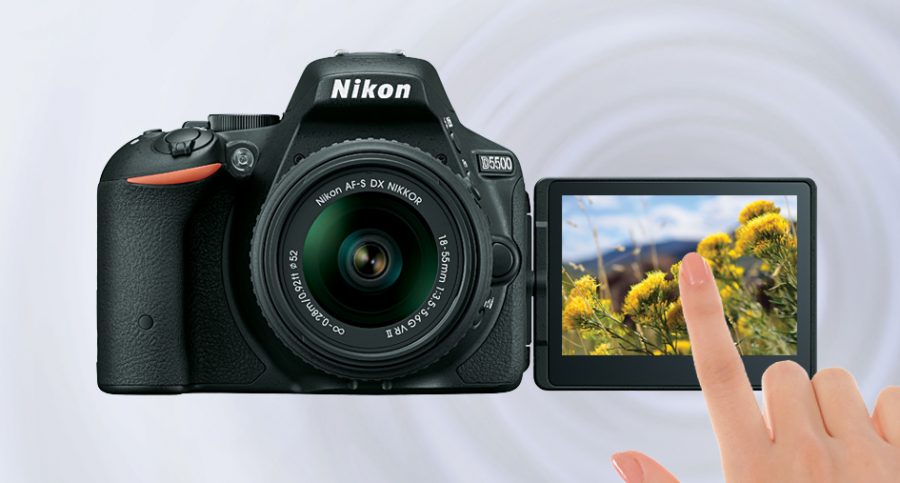
Firstly, at the first acquaintance, more compact sizes are striking in comparison with their predecessors. Secondly, a convenient panel with wheels and buttons, on which there is a necessary minimum for controlling the camera. Thirdly, a closer look reveals a good resolution CROP matrix, a touch screen convenient for beginners, and an excellent whale lens in the kit.
Canon EOS 550D
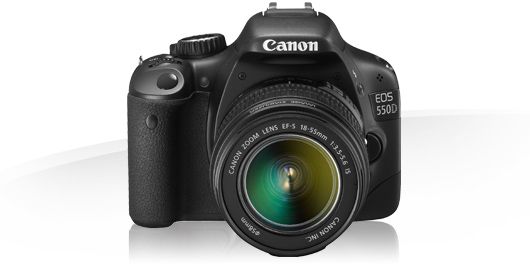
For those who are familiar with the DSLR market, it is obvious that Nikon, a direct competitor, could not help but release its successful model in this segment. It is in every sense the Canon EOS 550D. Despite the fact that the camera has been produced since 2010, it has not lost its relevance even in 2019. And thanks to the constant appearance of new products, lowering the price of it only encourages the interest of newcomers.
Its distinguishing features are an 18-megapixel sensor and an integrated DIGIC processor. As practice shows, this is one of the most successful combinations in all brands of cameras from Canon. In addition, it is complemented by convenient 9-point autofocus and a good burst speed of up to 4 frames per second. The characteristic ergonomics for all Canon cameras will not leave indifferent fans of this brand.
Sony Alpha 68
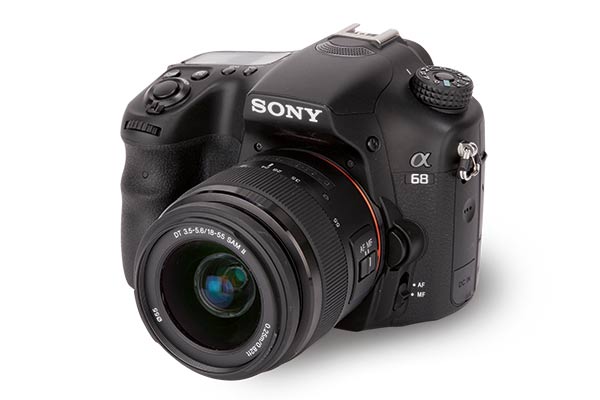
The Sony Alpha 68 is just a bargain for its price. Among its closest competitors, it stands out with its original 4D focusing system, which allows you to create clearer images of moving objects while shooting in low light. In addition, its technical characteristics include a convenient LCD-display, a wide range of ISO - from 10 to 25,600 and a 24-megapixel sensor.
Perhaps, there is only one drawback inherent in such brands of cameras - a relatively small number of branded service centers and a narrow selection of original lenses. If this does not bother you, then you can safely opt for a Sony camera.
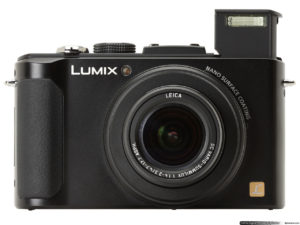
Panasonic Lumix LX7
Panasonic has excelled in the compact camera market like no other. There were virtually no unsuccessful models in the Panasonic Lumix line. Among all, we can note the LX7, which distinguishes a successful combination of price and quality. Thanks to the fast lens, it’s possible to get decent photos for the “soap box”.
In addition, the Panasonic Lumix LX7 has a very compact size, user-friendly menus and good ergonomics. Many professionals admit that they could purchase this camera as an addition to the DSLR. It is not always convenient to take a lot of bulky equipment with you. This compact is quite capable of replacing it at a friendly picnic, where the quality of photos is not so important.
Sony RX100
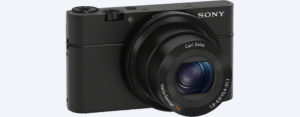
This model belongs to the so-called advanced "compacts". The manufacturer himself recommends it to amateurs who want to move to a new level of shooting, or to professionals who are tired of the large size of "DSLRs". And indeed, she has rather successful characteristics that allow such bold statements to be made.
The Sony RX100 has borrowed many specs from SLR cameras. This is a good resolution of the matrix, support for RAW, a good range of photosensitivity - from 100 to 12 800, an LCD screen and much more. At the same time, the manufacturer managed to maintain a fairly compact size. Even the relatively high price for such cameras does not deter consumers. In 2019, a lot of Sony RX100 were sold.
Nikon Coolpix P600
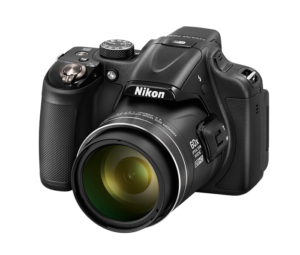
It is believed that Nikon and Canon focused mainly on the production of SLR cameras. Therefore, many do not recommend buying compacts of these brands. But the Nikon Coolpix line refutes this claim. For many years, quite interesting models of compact cameras have been produced under this brand.
One of them is the Nikon Coolpix P600. True, it can not be classified as "inexpensive and good." Its price is above average. However, the quality of the images will far exceed the cheaper analogues.Thanks to the built-in optical zoom, you can get successful bird shots, take family photos and capture night festivities. For the amateur, choosing Nikon Coolpix P600 is justified.
Olympus E-PM2
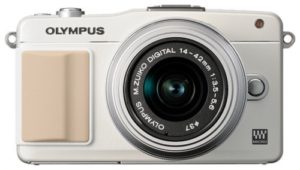
Those who can’t choose between a compact and a DSLR can be advised to buy an Olympus E-PM2. Although it belongs to the amateur class, it has a number of possibilities that are inherent in good “SLRs”. When buying, the kit comes with a successful lens that allows you to shoot outdoors and make good reportage shots.
At the same time, it has compact dimensions and fits perfectly in the shirt pocket. Among the shortcomings, one can note only the poor quality of portraiture and the relatively fast discharge of the battery. But the latter is certainly not scary for an amateur. Olympus E-PM2 can be chosen as a second, camping device.
Sony α7 II
Perhaps, Sony α7 II managed to collect really all the best qualities in one camera. In 2019, this novelty turned the idea of hybrids upside down. It is equipped with a full-frame sensor, has compact dimensions, a fast autofocus system and good ergonomics.
Obviously, such a novelty will not lie on the shelves for a long time and will find its consumer. This could not fail to be noted at many prestigious photo exhibitions, where the Sony α7 II won prizes in its category.
To summarize
After studying all the models, the question remains open, how to choose really your camera. To facilitate the task of a newcomer to the world of photography, the table below shows how to choose a camera for an amateur.
| P / p | Subject for shooting | The desired device |
| 1 | A lot of photos are taken for themselves, which are mainly laid out on social networks. | A good smartphone or an inexpensive "soap box". |
| 2 | I would like to always have a camera at hand, but still get high-quality pictures in nature. | Expensive "compact" or the initial "mirrorless". They are often comparable in price. |
| 3 | We need a family chronograph that takes great pictures indoors. | A SLR or mirrorless camera, supplemented by an external flash and a portrait lens. |
| 4 | It is required to take high-quality pictures during long trips. | In this case, only a “SLR” with an impressive supply of lenses. |
In conclusion, I would just like to note that the best cameras for fans are not a separate class that exists on its own. Rather, these are some selection criteria that share common features. Each type of camera can be found. It is only necessary to decide what it is actually needed for.


Is this a 2017 rating? None of these cameras can be bought in European stores. They have already left the category of new ones as obsolete models. Only on the Internet at discount prices.
I will add. The compact Nikon Coolpix, whose price was “called” above the average, is sold in online stores from 200 to 250 euros. Is the price above average?
I don’t understand what fright the author inserted into the review of amateur cameras Sony a7 II? Its price starts from 1,500 euros. And what a lyutel can afford it.
In short, the conclusion is that the author was given an order to quickly bungle the review, which he collected from the Internet, inserting both outdated models and those that do not correspond to the indicated prices and the amateur range. I do not recommend being guided by these conclusions.