Screwdrivers or in common people "shuriki" firmly entrenched in modern life. And to say that they replaced the screwdrivers is not correct. They are used in solving many everyday issues. Screwdrivers screwed, twisted, drilled. And in the presence of imagination, they are used to clean rims, replace the mixer, add to a manual meat grinder and much more.
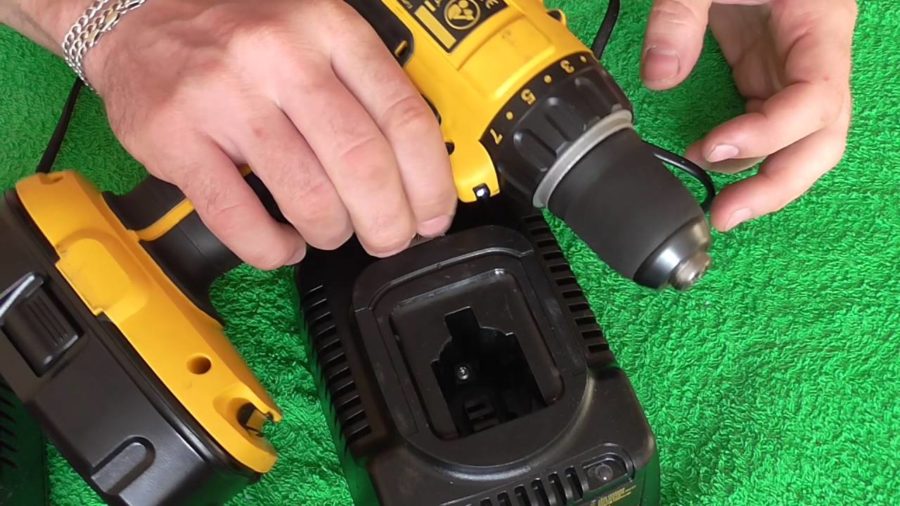
This is convenient, since many models of "shurikov" work on battery power. It is from him, and more precisely from the correct charging of it, how long and effectively the tool will work.
How long does it take to charge
One of the important charging rules is directly related to the time spent by the battery in the network adapter. To calculate it for a specialist in the field of exact sciences will not be difficult. You need to know the type of battery, its capacity, charging current and type of charger. After that, using a number of simple calculations, set the charging time.
What to do the rest? No matter how corny it sounds, you just need to read the instructions, where the battery charging time is clearly indicated by the manufacturer. If there is an appropriate indicator, it is necessary to be guided by its indications.
As a rule, the “comfortable” charge for a battery lasts 5-7 hours. Sometimes, a professional tool is equipped with pulse adapters, reducing the charge time to 1-2 hours.
Do charge before storage
It is important to remember that observing the correct time to restore battery capacity does not guarantee a long battery life. From this follows the second rule for charging batteries, which determines the storage order of batteries during breaks in the operation of a screwdriver.
In this matter, it is necessary to consider the type of battery. The most common options are nickel-cadmium (Ni-Cd) and lithium-ion (Li-Ion) batteries. The latter, despite the relatively low self-discharge rate, require special attention in this matter. This is due to the fact that this type of battery does not tolerate a decrease in capacity to 0. In this case, it is possible to disable the built-in protection, which prevents the negative consequences of overheating of the battery or overcharging current. Therefore, the storage of these batteries is recommended with a charge of 50%.
Nickel-cadmium batteries are devoid of this drawback. Moreover, preparing them for work after long-term storage is even desirable with 0 capacity.
A general recommendation is the separate storage of the screwdriver and battery during breaks in use.
The difference in charging nickel-cadmium and lithium-ion batteries
In addition to the difference in the storage of nickel-cadmium and lithium-ion batteries, various charging approaches are applied to them. This is due to the “memory” effect characteristic of cheaper Ni-Cd batteries, that is, the ability to reduce maximum capacity when used improperly.
The main differences in this matter of the two types of batteries are:
- Lithium-ion batteries can be charged with any remaining capacity. We recommend that you fully discharge Ni-Cd batteries before installing them on the AC adapter.
- Li-ion batteries are not afraid of insufficient or overcharging under the condition that the protective electronics function normally. Ni-Cd is preferably charged to the maximum and removed.
- Nickel-cadmium batteries must be “pumped” to achieve optimal capacity by carrying out 3-5 full charge-discharge cycles. The Li-Ion battery has no restrictions on the number of cycles, but at any intensity of use, it significantly loses capacity after 2-3 years after purchase.
Summing up the above, we can conclude that the life of cordless screwdrivers is largely determined by the observance of simple battery charging rules. Ignoring them will lead to the need for unplanned updating of batteries, the price of which can reach 80% of the cost of a new tool.


I sometimes use my Shurik by Energomash (almost new, the batteries just died from a long time) and sometimes I use it in the city, including when charging from the mains, and it does not work well for long, for 2 minutes. I bought a Shurik network at Fazenda, a cable of 5 meters and more problems with charging and “dead” batteries, I do not experience their winter storage. And I advise everyone.