A neiler, or an electric hammer, as it is also called, performs the function of hammering nails without the participation of a classic hammer and does not require special effort on the part of the user. Its use allows you to avoid classic injuries when performing finishing work. But is this tool really necessary? We will figure out whether it is possible to do without it in various situations related to construction.
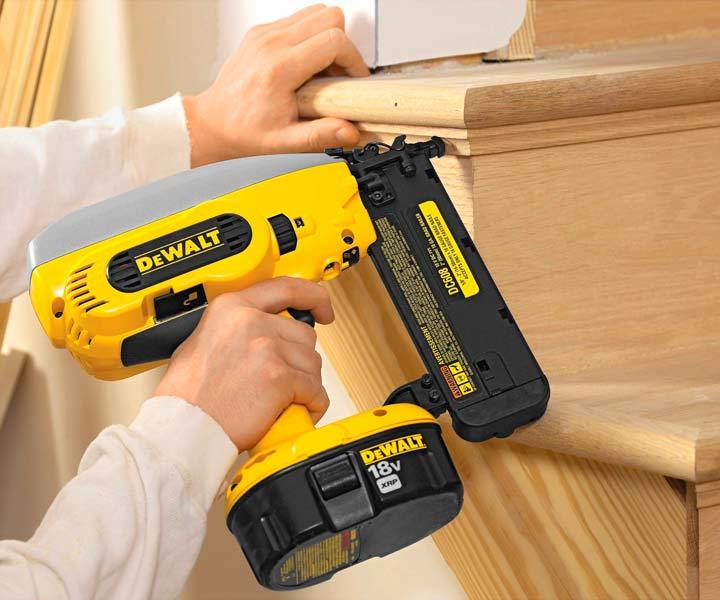
The principle of operation of the electric hammer
Clogging of fasteners with the help of a neiler occurs under the action of compressed air, which pushes it into the material.
The hammer driving mechanism is as follows:
- air is compressed in the area of the handle, from where it is pushed into the cavity (chamber) of the instrument. In this case, the excess can be released through the deflector;
- compressed air generation stops when the trigger is pulled. The pressure in the chamber of the tool pushes the hammer, which drives the fastener;
- after releasing the hook, the valve, which serves to interrupt the air flow, closes with the force with which the nail was pushed out, the internal piston takes its initial position.
Electric hammers can be used on surfaces of any thickness, while there is no risk of leaving through holes. This is controlled by a pulling trigger. When the effect on it ceases, the nail stops its movement.
Modern models of electric hammers are equipped with protection against accidental operation in the absence of pressing the trigger.
Where are used
Electric nailing tools are used to install various fasteners:
- nails of various diameters;
- staples of any caliber;
- dowels;
- hairpins.
Scope of the electric hammer:
- production of wooden containers (pallets, boxes);
- roof laying;
- construction of houses made of wood;
- interior and exterior decoration;
- furniture manufacturing;
- installation of facing materials.
How much an electric hammer is needed
Using this tool avoids a number of classic injuries that inevitably occur when working with fasteners.
Neiler will help out in the case of work with thick materials and coarse fasteners, for working with which physical effort may not be enough.
The advantages of using an electric hammer are as follows:
- reduction in energy costs;
- the ability to avoid injuries when driving nails and other fasteners;
- acceleration of the construction or repair process;
- more accurate installation of fasteners and the appearance of the material with which work was performed.
Many are stopped by the cost of this tool. And you can refuse to use it if you have a small amount of work to hammer in nails, which is easy to handle with an ordinary hammer.
Thus, the electric hammer is an indispensable assistant for the need for a large-scale installation of fasteners. Therefore, this tool is simply necessary for those who often use a hammer in their work.


