Before choosing a circular saw, you need to familiarize yourself with the types of tools and their characteristics, otherwise there is a risk at an exorbitant price to buy equipment that can not cope with the tasks assigned to it.
Content
Varieties of circular saws
All types of circular saws can be divided into several groups:
- Tame.
- Board.
- Stationary
- Submersible.
- Rechargeable.
Each species has advantages and disadvantages.
Hand held
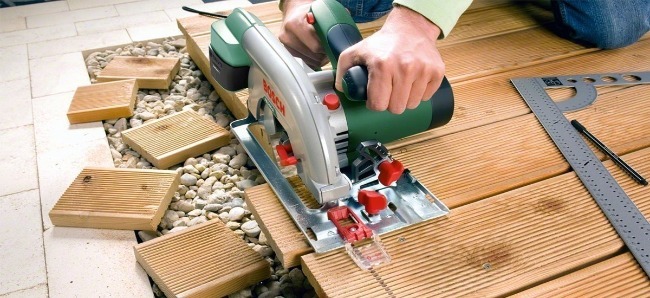
Small and medium power tools are suitable for home and one-time use. They are mobile, small in size and weight, can handle different materials.
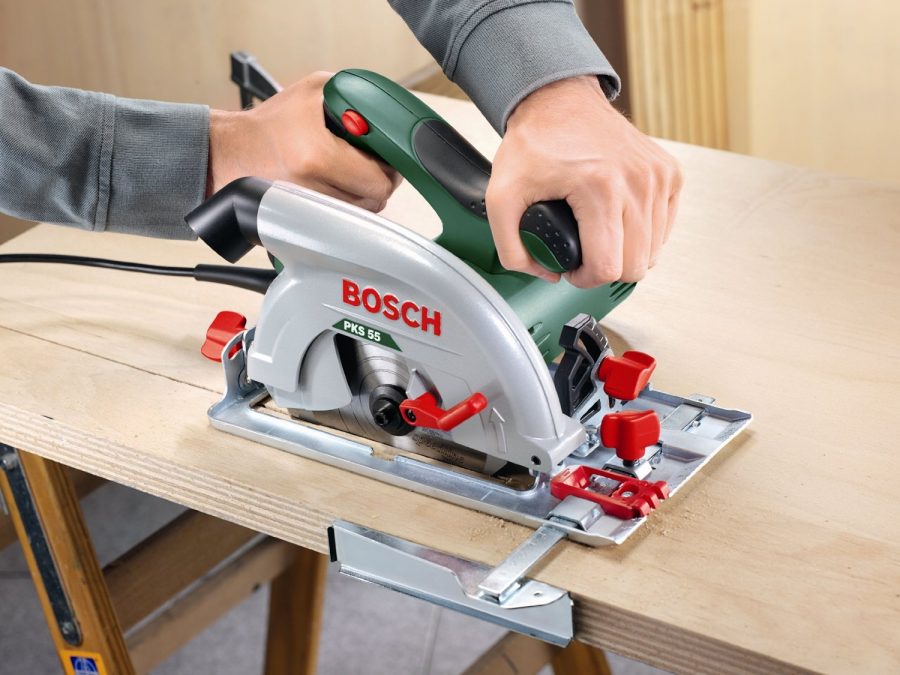
Benefits:
- Low price
- Easy to carry or carry from place to place
- Takes up little storage space
- Universal to use
Minuses:
- When working, you have to hold the tool in your hands
Tabletop
These saws are fixed to the base or table. During operation, the operator changes the position of the workpiece, the tool itself is stationary. You can choose a hand-held circular saw for the house for periodic construction works, for example, the construction of a bathhouse or a country house.
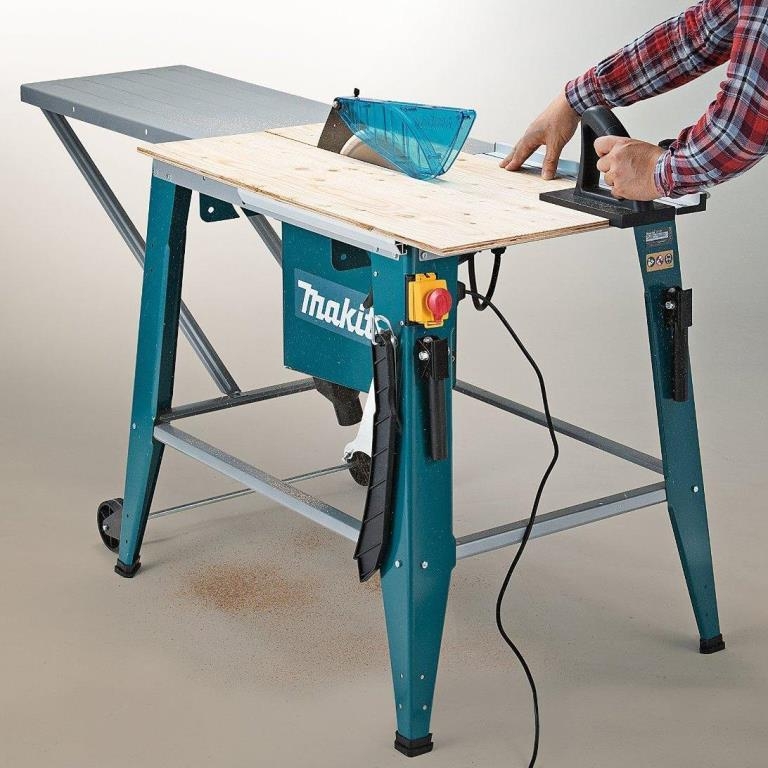
Benefits:
- Good power
- Reliably fixed tool provides high precision cutting
- Mobile, can be moved from place to place
disadvantages
- The size of workpieces is limited
Stationary
These devices require special installation space. They are suitable for systematic, long-term work, can be useful for small production. Stationary saws are installed on a cast or prefabricated bed.
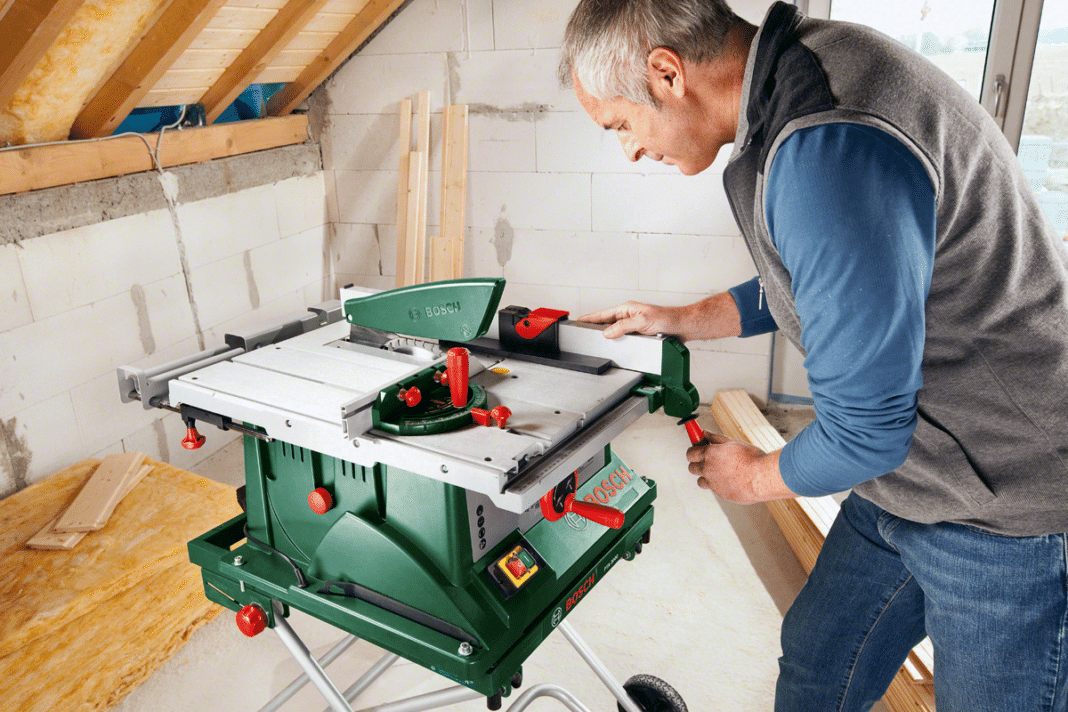
Benefits:
- Great power and speed
- Low noise and minimal vibration
- Convenient to handle wide workpieces
Disadvantages:
- High price
- Require special installation space
Submersible
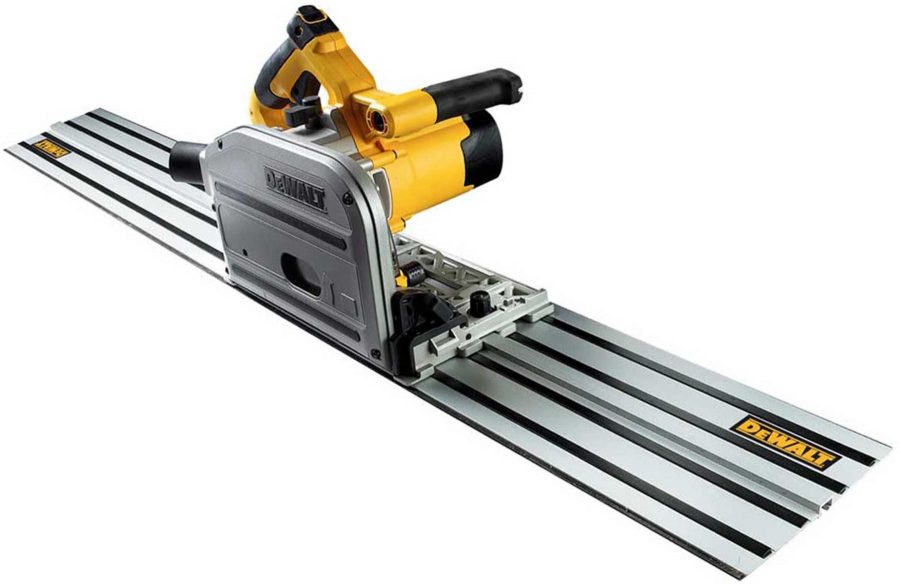
This type of saw was designed to level the main drawback of disk counterparts - low precision cutting. In immersion devices, the cutting tool is hidden by a protective cover, it comes out directly at the moment of operation.
Benefits:
- Conveniently handle local areas of complex configuration
- Provide high precision cutting
Minuses:
- Cost more than hand models
Rechargeable
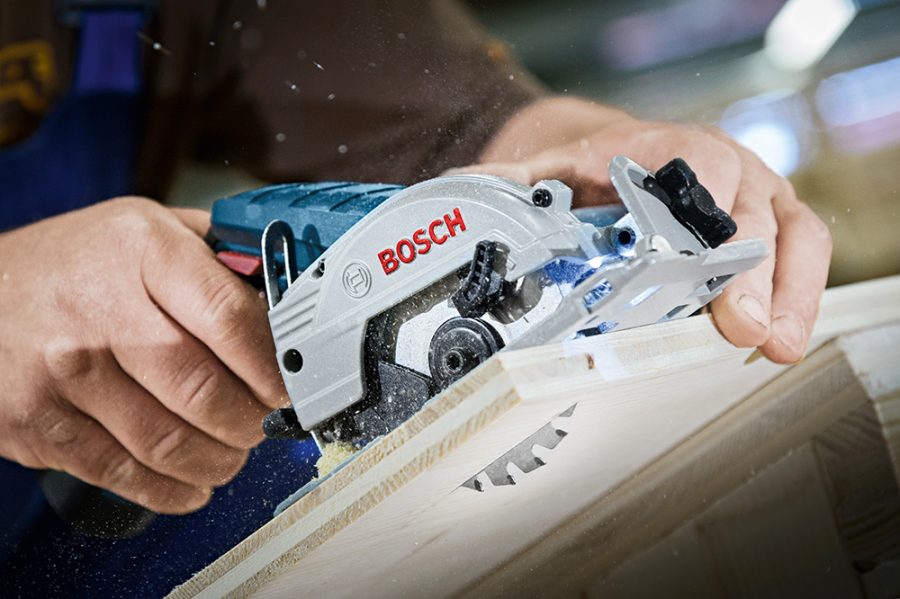
These small handheld devices are suitable for use in tight spaces. They are designed for short-term operation and require recharging after 15–20 minutes of use.
Benefits:
- Not tied to a power source
- Compact and mobile, allow you to work at heights
Minuses:
- Power drops as battery power decreases
What are the parameters for choosing a circular saw
Before choosing a circular saw, you need to study the characteristics of the tool. They determine the ability of the device to cope with different types of work.
Cut depth
This value characterizes the ability of the tool to cope with workpieces of different thicknesses. The depth of cut depends on the design of the circular saw and the diameter of the working tool.
The following conditional gradation exists:
- Shallow depth of cut - up to 55 mm.
- Medium - from 55 to 100 mm.
- Large - over 100 mm.
Models with a small depth of cut are suitable for one-time work. With large - for long and frequent use.
Power
Before choosing a wood saw for a house, you need to pay attention to the power of the tool. This is the main parameter that determines the speed of the device and its ability to cope with the load.The higher this indicator, the easier it is to cope with thick and dense material. A larger diameter cutting tool can be installed on a saw with a powerful engine, which, in turn, will increase the speed of work and increase the maximum depth of cut.
Conventionally, all types of circular saws can be divided into 3 categories:
- Low power (300-800 W). Suitable for periodic work with small workpieces.
- Medium power (800–1500 W). Universal devices, ideal for sawing blanks at home and in the garden.
- Powerful (1.5-3 kW). Professional saws that can handle a large amount of work.
The required power level depends on the type and time of loading. But models of 2-3 kW are distinguished by their large weight and dimensions. The massive and robust design is designed to spin a large disk to high speed and provide it with stable operation with minimal runout.
Speed
The rotation speed of the disk affects the performance of the tool, its ability to work with solid materials and the accuracy of the cut. Also, at high speeds, the likelihood that the disk will jam.
The higher the rotation speed, the less barbs and chips will be on the cut, and the easier the saw will pass dense material. However, at high speeds, the disk blade is very hot, so burn marks may remain on the wooden blanks, and the plastic will melt at the edges. To exclude deformation of the material, it is worth choosing a saw with an adjustable speed that can be adapted to the type of raw material.
Ability to work with metal
Circulars are usually not used for working with metal - this tool has too large tooth pitch and too low rotation speed, which will give a strong beating. Nevertheless, sometimes in construction it is necessary to cut tin blanks with such a saw for lack of a more suitable tool.
For such purposes, it is necessary to choose a model that can work with metal (it is called multi-purpose). The main advantages of these saws:
- High performance.
- Provide an even cut without burrs and chips.
- Low noise and vibration.
- The workpiece is not heated and does not spark.
- Able to cut at an angle.
- When working, the owner relies on the sole of the tool for greater stability, and does not hold it on weight.
A carbide gear disc acts as a working tool in such models, which equally well copes with both a steel pipe and an aluminum billet.
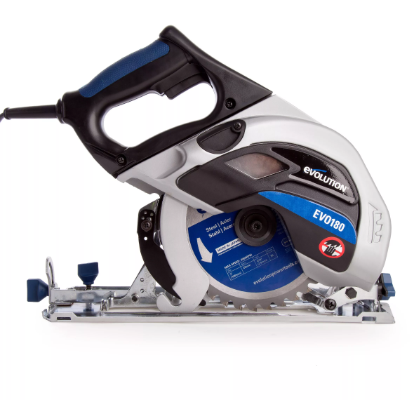
The main disadvantage of circular saws for metal is the high price. For example, the manual multi-purpose model Evolution SAW180HD costs about 30 thousand rubles.
Maximum disc diameter
The transverse size of the cutting tool affects the depth of cut and the speed of the saw. Depending on the model, it can range from 51 to 450 mm. Large diameter circular saws can cut workpieces folded in several layers in one go, which will reduce operating time. 160–250 mm wheels are suitable for home use. It is worth considering that models with large cutting wheels are more dimensional, bulky and heavy.
Body material
Manufacturers often use light and cheap high-strength plastic to make the case of circular saws. In some models it is made of metal, which is more reliable and resistant to mechanical damage. You can choose a circular saw for wood for the house and in a metal case, however, they weigh much more.
Work at an angle
Most circular saws are able to work at an angle of 450 degrees, there are models that make cuts at an angle of 600 degrees.
It should be noted that the maximum depth depends on how the working disk is located - perpendicular to the surface or at an angle.
Shape and number of teeth
The shape of the tooth affects the ability of the disk to cope with certain tasks:
- FT flat cutter. Suitable for longitudinal sawing of wood of different hardness.
- Replaceable cutter ATV. It gives a clean and even cut, suitable for longitudinal and transverse cutting of wood, processing plywood, composite materials, etc.
- Combi cutter Combi. The combination of flat and interchangeable cutting tools, suitable for all types of work.
- Trapezoidal flat cutter TCG. Suitable for processing soft metals, polymeric materials and wood.
- Replaceable cutter with increased HiATB side. Designed for the processing of materials prone to splitting and finishing cross cut.
The number of teeth affects the speed and cleanliness of the cut. The more of them, the cleaner the cut will be, and the greater the load on the engine.
Additional functions
Minor options and parameters that matter:
- Tooth tilt. Measured by the deviation of the edge surface from the radius of the disk. If the cutting part of the tooth protrudes forward, the inclination is considered positive. It is well suited for longitudinal woodcarving.
- A method of generating electricity. Battery models are mobile, but unsuitable for continuous operation. They can help out in the forest, on the roof of the building, away from a constant power source. Networks are used for long-term work in one place, they are more powerful and do not need recharging.
- The weight of the device. This is an important parameter for choosing a home circular saw. The lighter the saw weighs, the easier it is to work, and the less the operator will get tired.
- The presence of a pipe. The part allows you to connect a vacuum cleaner to the saw, reducing pollution of the workplace.
To choose the right circular saw, you need to take the tool in your hands, evaluate its ergonomics, ease of arrangement of levers and weight.


