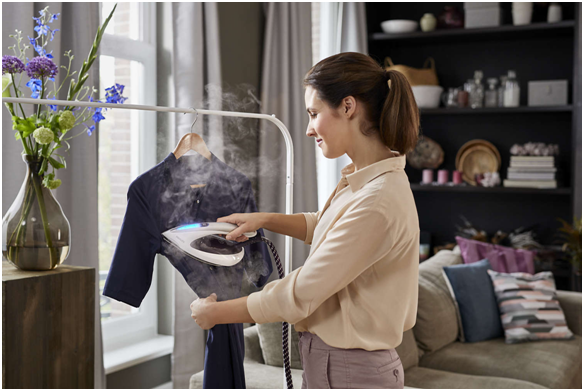
The home appliance market offers a ton of helpers to make life easier and better. An example of such a gadget is, for example, a robotic vacuum cleaner that is able to work in automatic mode, a “smart” air conditioning and air purification system, a dry-pressing washing machine, and, of course, a steam generator or a clothes steamer.
Despite the fact that the main purpose of the last two devices is to facilitate the process of ironing, they are not identical and in no way can become a full replacement for each other. The first thing that distinguishes a steam generator from a steamer is the principle of steam supply: for example, a steam generator delivers it under pressure in a “dry” form, and the steamer - in a wet and not under pressure. Also, the devices differ from each other also in the outlet temperature: most models of steamers produce 90-99 degrees, and steam generators - about 150-160 degrees.
Content
Steam generator
The steam generator for domestic use is a small-sized platform, most of which is occupied by a special container for liquid (it is also called a boiler), where it turns into steam. A silicone lead-in tube is attached to the platform, and a mechanical or touch control panel can be located on it. The difference between the steamer and the steam generator also lies in the fact that the steamer is a separate full-fledged device, and the steam generator is supplied exclusively with the iron and cannot be used separately.
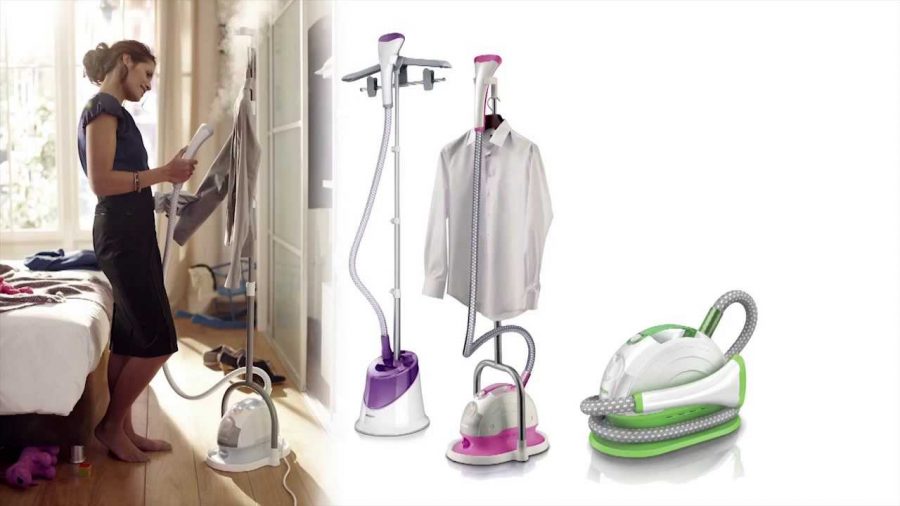
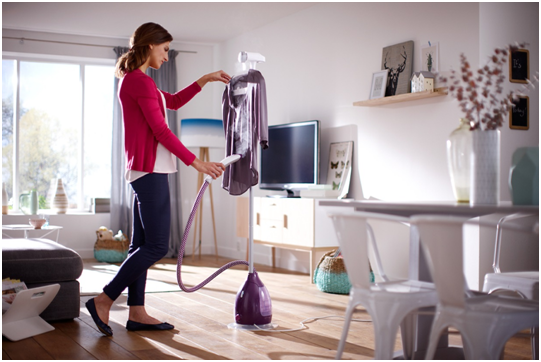
Figure 1 - Iron with a steam generator Figure 1 shows a classic representative of such devices; immediately behind the translucent plastic there is a liquid compartment, the volume of which can vary both smaller and larger (on average, it is 1.2-1.5 liters). You can also see how a special wire approaches the iron through which steam is supplied from the boiler. Using a steam generator, you can not only quickly iron several layers of fabric at once (for example, bedding for ironing can simply be folded several times) or “thick” things (for example, towels), but also reduce the processing time of silk or synthetic clothes by several times. According to averaged estimates, a steam generator produces 3-4 times more steam per unit time compared to an iron equipped with a water container. Fast smoothing is possible thanks to similar indicators of steam production, as well as the creation of a large pressure at the outlet: at the moment, the average model is able to create a pressure of 3-5 bar. Steam generators are also equipped with several additional functions, for example: Due to the fact that the steam generator delivers dry type steam, it can be used to process the surfaces of any fabrics, even the most delicate ones. It has been proven that hot steam handles ironing better than regular iron. This is primarily due to the fact that the standard model is almost useless when ironing sweaters and thick sweaters. At the same time, steam generators, being multifunctional devices, for the most part have several predefined operating modes, each of which provides for the release of a certain amount of liquid per unit time under a pressure set by the manufacturer. You can even completely turn off the steam supply and use the device as a regular iron. However, such gadgets are not without drawbacks. So, most of these devices: It should be said that modern steam generators, contrary to a common myth, are not able to leave any stains on clothes and cause the formation of new spots due to the improved design. Firstly, the bottom of such irons has a different shape of holes and a different principle of steam supply, and secondly, the Anti-Drop or Drop-Stop systems additionally protect against such situations: as soon as the system notes a drop in temperature in the tank below a given mark feed automatically stops. As mentioned above, the main differences between the steamer and the steam generator are that the hot steam that it generates, firstly, has a higher content of water particles, and secondly, a lower outlet temperature compared to the generated steam generator. Despite the fact that at present there are several modifications of steamers (for example, manual, gravity and others), the classic version is considered floor standing, which in its design has: Such a device is suitable not only for smoothing things, but also for removing unpleasant odors and even simple spots from them. The presence of a special brush on the nozzle with a combination of hard and soft fibers allows you to remove even the smallest particles of dust and dirt from the surface of the clothes. Also, with the help of this gadget it is much more convenient to work with things that are complex for ordinary ironing that are richly decorated (for example, dresses can have a pleated or frill, on blouses - complex collars, frills, etc.). The maximum steam supply for these devices is low, on average, 40-50 g / min, with a maximum value of 100-120 g / min; however, the steamer may also have an automatic shutdown function. The degree of steam supply is usually regulated using special mechanical buttons that are either integrated into the handle or into the plastic case of the gadget (as in Figure 2). In general, this image most fully conveys the design structure of a modern floor steamer. Figure 2 - Classic floor steamer Since the device itself does not take up much space, it can be used not only to iron clothes, but also to clean fleece carpets or to disinfect curtains and curtains without removing them. The steamer shows itself perfectly when working with knitwear, synthetics, velveteen. The steamer is perfect for ironing very gentle and light things, since the lack of pressure prevents new folds and dents from forming during ironing, but at the same time, increased humidity and relatively high temperature give the desired effect. It is because of the low vapor pressure that the steamer does not cope with hard tissues. At the same time, this effect of moisture and temperature “raises” the clothing, giving it a natural shine, a little volume and, thus, improving its visual perception. The main disadvantages of steamers are: The main difference is the main purpose; the steam generator is, in fact, an iron with an expanded range of capabilities, and the steamer is an auxiliary device for cleaning things from light impurities and ironing them as an auxiliary option. It is with the help of a steamer in modern shopping centers that the consultants give the display cases of clothes the proper look and remove grease, dust and other impurities from the fabric fibers. It should be noted that if there is no task of cleaning this or that coating, an iron with a steam generator can become a substitute for the steamer: it is enough to manually set the required temperature value, set the humidity parameters and start working. The only thing that the steam generator is inferior to the steamer in is the possibility of carrying out a full cleaning. Of course, you can sprinkle clothing with water, and then walk along it with a steam generator, but in this case you need to be sure that the water is devoid of mechanical impurities as much as possible, otherwise the cleaning process can only aggravate the degree of pollution. It is impossible to say with confidence that it is better, a steamer or a steam generator: they have different tasks, and the same gadget cannot meet the requirements of all people at once. When choosing, it is worthwhile to rely on the purpose of use: ironing or recycling things. In the first case, it is better to purchase a steam generator, because with its help you can very quickly iron a large number of things without spending a lot of time. Considering the models presented on the market, you should pay attention to the following characteristics of steam generators when buying: The purchase of the steamer will be justified if it is planned to: The steamer perfectly copes with complex elements of clothing, for example, corrugation or pleated, because if the wardrobe has a large number of things with a similar style and, in principle, a complex cut, this gadget will be an indispensable assistant. Figure 3 - Using a steam generator as a steamer Due to the fact that the steamer copes with these tasks perfectly, it can always be seen in large clothing stores, ateliers and dry cleaners. At home, it can be used only in conjunction with a standard iron (first things after washing take shape during ironing, and after that - volume and correct shape during processing with a steamer). Otherwise, the purchase of a steamer does not justify itself: it makes no sense to buy such a professional tool to pass them shirts or a standard dress form. In general, we can say about the steamer that it is used as an auxiliary tool for processing fabrics, which have already been passed by an iron, but after that they changed their shape. This applies either to those things that are tightly packed in a suitcase or travel bag, or those that have been in the closet for a long time. When choosing a steamer, pay attention to: To summarize, we emphasize - it is up to you to decide what exactly to buy, based on the goals of your application. If you want to reduce the time of ironing constantly accumulating laundry and quickly process clothes of any type - you need a steam generator, but if you want to give things freshness and a neat appearance after ironing, then you need a steamer.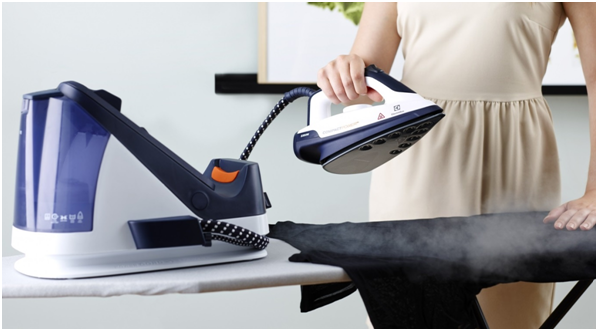
Steamer
The main differences between the steamer and the steam generator
Basis of choice