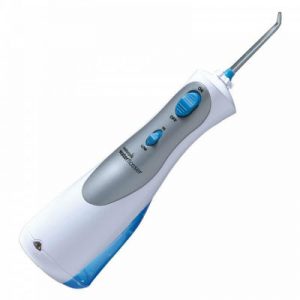
 An effective toothbrush or floss is not enough for effective oral care. That is why dentists recommend a professional cleaning at least once a year. However, you can improve the condition of the teeth at home. Portable irrigator will help remove plaque and food debris, reduce the risk of tooth decay. This device is easy to use and is suitable for holders of fillings, implants and braces. What are the irrigators and how to choose the right device?
Content
What is a portable irrigator and why is it needed
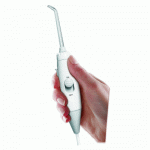
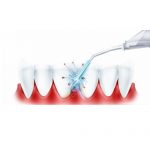
An irrigator is a device that uses water or a medicine to wash food debris out of hard to reach places. Water is supplied to the mouth under high pressure, which makes it easy to remove plaque, massage the gums, improves blood circulation and reduces the risk of diseases.
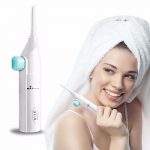
Portable irrigators differ from stationary devices by the presence of an integrated water tank, as well as an autonomous power source. Most mobile devices are suitable for travel or short trips, but they are not designed for permanent use.
Features of irrigators, pros and cons of using
It is impossible to do without an irrigator for those people who wear braces and other orthodontic constructions. Only this device is able to qualitatively clean the interdental space and remove old plaque. And if there is a risk of damaging the gums when using dental floss, then the irrigator acts as softly and painlessly as possible. It improves blood circulation and prevents tooth decay. Despite all the benefits, portable irrigators are not always beneficial. Here are the main pros and cons of these devices.
Pros:
- a large selection of devices in different price segments;
- you can replace the drug with plain water;
- perfectly copes with cleaning the interdental space, tongue and gums;
- significantly simplify the care of braces, fillings, implants, etc .;
- suitable for travel and trips;
- do not require access to a fixed network;
- improve the circulation of the gums and strengthen the teeth.
Minuses:
- an irrigator will not help with an old stubborn raid;
- the drug should be selected with caution if there is an allergy;
- a strong jet can damage the gums;
- cannot replace a full-fledged stationary irrigator.
Types of nozzles
At least two additional nozzles that can easily be replaced in the event of a breakdown are included in the package for battery irrigators. Each nozzle has a purpose (for braces, implants, for the tongue, etc.), so the use of the wrong tip is contraindicated. There are nozzles of the standard type, orthodontic, periodontal, devices for cleaning the tongue, etc. Consider the types of tips in more detail:
- Universal tip. Suitable for people with healthy teeth and gums. It copes with cleaning light plaque, food debris and washing bacteria.
- Orthodontic nozzle. Designed specifically for people with orthodontic designs. It removes plaque from braces, washes dirt under the edges of the gums. It has the same functions as standard tips, but, in addition to the sprayer, also includes a small brush.
- Periodontal tip. Washes dirt beyond the gingival margin. It has a soft rubber tube that helps direct the jet.
- Nozzle for removing plaque. Has a special brush on the end. It copes with cleaning fillings, implants, crowns, etc.
- Brush for cleansing the surface of the tongue and cheeks.
- A soft initial tip that is used to clean and disinfect the nasal cavity.
If the device is used by several people at once, then for each of them it is necessary to purchase its own nozzle. Tips should always be disinfected to prevent the formation of pathogenic bacteria.
How to choose an irrigator
When choosing a travel device for cleaning the oral cavity, one should take into account not only the capacity of the liquid tank, but also the maximum pressure, the principle of operation, the number of interchangeable nozzles in the kit, as well as the possibility of adjusting and switching the pressure. Here are some useful tips to help you buy a quality device:
- Food. Traveling devices can operate from both finger batteries and a built-in battery. The first option is cheaper and has less weight. However, it is better to give preference to devices with their own battery, as they do not require constant battery changes.
- Operating principle. According to the principle of operation of the device are divided into pulsed, micro-bubble, single-jet. Pulse irrigators supply fluid with short pulsations. Such devices are more effective in cleaning the oral cavity than single-jet ones. But the best are still considered micro-bubble models. Water is saturated with small bubbles that burst upon contact with the gums and teeth.
- The number of nozzles. The cost of the device depends on the number of nozzles. The kit must have at least two interchangeable tips for efficient cleaning.
- Maximum jet pressure. A portable irrigator must have a capacity of at least 520 kPa. This indicator affects not only the pressure, but also the number of pulsations. We recommend choosing devices with ripple from 1200.
- Modes. A good irrigator should have several modes of operation. Initial cleaning should take place at the lowest pressure. When the gums get used, the pressure can be increased.
Choose irrigators from well-known manufacturers so that after-sales service is at a high level. Each device must be certified and safe to use. Check your barcode so you don’t stumble on a fake.
Rating of the best models of 2019
There are many manual irrigators with different characteristics and features. When choosing a device should focus on personal preferences and needs. We compiled a rating of the best irrigators as of 2017-2018.
B.Well WI-911
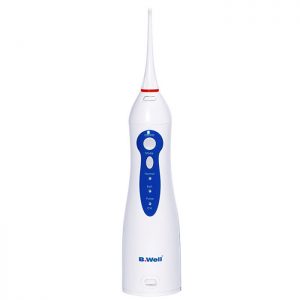
- Way of action: pulse
- Autonomous work: from the built-in battery
- Volume of rinse aid or medicine tank: 135 ml
- Maximum head pressure: 275-620 kPa
- Pressure regulator: yes, level
- Fluid Pressure Levels: 3
- Duration of non-stop work: 30 minutes
- Water ripple frequency: 1600 pulses / min
- Interchangeable nozzles included: 2
- The battery lasts for a month of use
- Easy to use
- The tank is filling up fast
- Small capacity for water
- The stub is quickly lost
Compact and functional portable irrigator for cleaning the oral cavity. It has two convenient interchangeable nozzles with 360 degrees rotation. The device is also equipped with a capacious battery and a small reservoir for liquid. The battery life of the irrigator is enough for several weeks of regular use.
Panasonic EW1211A
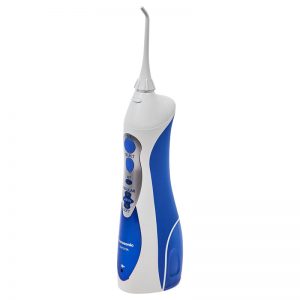
- Way of action: microbubble
- Autonomous work: from the built-in battery
- Volume of the rinse aid or medicine tank: 130 ml
- Maximum head pressure: 200-590 kPa
- Pressure regulator: yes, level
- Fluid Pressure Levels: 3
- Duration of work from a charge: 15 minutes
- Fluid ripple speed: 1400 pulses / min
- Interchangeable nozzles included: 2
- Compact body
- Three operating modes
- You can attach the device to the wall
- Low pressure
- Duration of work
Wireless irrigator with a long service life (from 5-7 years). Ideal for traveling and long trips. There is enough fluid in the tank for one cleaning. Included are 2 interchangeable nozzles.
WaterPik WP-450 Cordless Plus
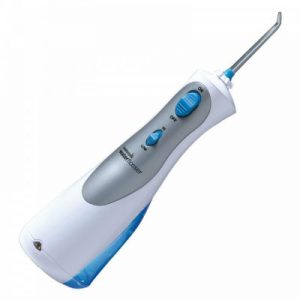
- Way of action: pulse
- Autonomous work: from the built-in battery
- Rinse aid tank capacity: 210 ml
- Maximum head pressure: 210-520 kPa
- Built-in pressure regulator: yes, step
- Pressure level regulator: 3 steps
- Duration of cleaning on a single charge: 30 minutes
- Liquid Pulse Rate: 1450 pulses / min
- Interchangeable tips included: 4
- The capacious battery holds a charge for a long time
- There are many nozzles included
- High power
- No level indicator
Portable irrigator WaterPik, which is included in the list of the best devices of its segment. It has the highest power among all road irrigators. Great for both travel and home use. The kit includes a universal functional tip for cleaning the tongue, an orthodontic nozzle for metal structures, for various implants or false teeth, bridges and crowns, as well as an initial nozzle.
Philips AirFloss Ultra HX8432 / 03
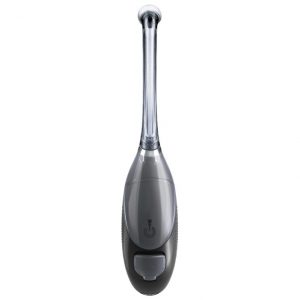
- Way of action: microbubble
- Autonomous work: from the built-in battery
- Rinse aid tank volume: 15 ml
- Maximum head pressure: 275-620 kPa
- Built-in pressure regulator: yes, step
- Pressure adjustment: 3 steps
- Replaceable tips in a complete set: 2
- Convenient Charger
- Bright design and comfortable design
- Small water tank
- Cleans nothing
- Long charging time
Lightweight and versatile device for removing plaque and food debris from the interdental space. Allows you to clean the entire oral cavity within 60 seconds. Uses compressed air and small droplet technology.
Rockymed RKM-1701
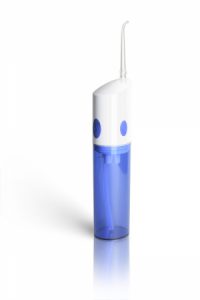
- Way of action: mono-jet
- Autonomous work: from the built-in battery
- The volume of the reservoir for the drug: 150 ml
- Maximum head pressure: up to 555 kPa
- Built-in pressure regulator: yes, step
- Fluid head adjustment: 3 steps
- Continuous cleaning time: 15 minutes
- Interchangeable tips included: 1
- Low cost
- Powerful jet
- Low noise
- Stylish body design
- Not suitable for thick rinse
- No spare nozzles
A budget model of an irrigator for cleaning the oral cavity. It has a volumetric reservoir for 150 ml. Thanks to its compact dimensions, the device fits easily into a bag or suitcase. It is possible to charge from a laptop or PC.
Output
For a quality and quick cleaning of the oral cavity, it is not enough to use only a toothbrush. A high-quality irrigator can relieve plaque, unpleasant odors and excess food. It also helps reduce the risk of tooth decay and gum disease. When choosing a device for cleaning, you should focus on functionality, tank volume and pressure level.