The tonometer in the house is an important device, especially for the elderly. Indeed, the instability of blood pressure often lies in wait precisely for the category of the population after 50 years. Therefore, when choosing, it is important to take into account many nuances that will minimize measurement errors, and a person will get an accurate result.
Content
What should be a tonometer for an elderly person
Tonometers for the elderly should be accurate, so it’s easier for the doctor to accurately determine the degree of hypertension, and the patient should independently monitor blood pressure (BP). Ease of use is also not an unimportant aspect, since it is often difficult for elderly people to cope with new technologies and a host of additional functions.
To make the right choice, you need to know what kind of pressure measuring devices exist:
- Mechanical. Consist of a cuff, pressure gauge, stethoscope and pear. This group is attractively priced and accurate. The disadvantage is that for measurement you need to have good hearing and vision, and this is often problematic in old age.
- Semi-automatic. The device also includes a cuff andpear, butpressure gauge in these modelselectronic. ATair nIt is downloaded manually, and the calculation of results occurs automatically. Battery operated
- Automatic. It consists of a cuff and a device with just one button. The most simple to use, but may give errors. They require compliance with all measurement rules, and respond to any deviation.
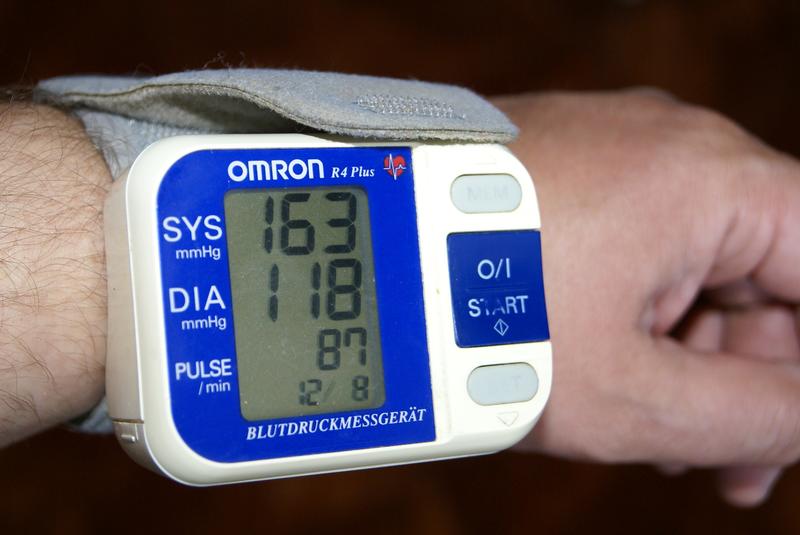
- Tonometer on the wrist. The cuff is attached to the device itself and is worn on the wrist. After 50 years, it is better to use the cuff on the shoulder, since the arteries on the hand are not so sensitive, and errors in the readings are probably possible.
In the event that an elderly person does not conduct pressure measurements independently, the proven “mechanics” is definitely the best option, but when you have to do the measurements yourself, then an automatic device will come to the rescue, which is extremely simple to operate (with just one button control).
How to choose the right tonometer
To choose an accurate, high-quality and simple device, you should pay attention to the following:
- age of a person. Tonometers on the wrist for the elderly is not the best option, since the error in the testimony in this case is inevitable. Definitely - the cuff of the device should be on the shoulder;
- the presence of concomitant (aggravating) diseases of the cardiovascular system. For example, if the patient has arrhythmia, you should definitely stop the choice on the machine, with the function of indicating this indicator;
- estimated frequency of use. For frequent operation, you should pay attention to the machine, which works on battery and mains;
- weight category of a person. Obese patient needs to choose an apparatus with an enlarged cuff;
- hearing and vision of the patient. If there is a hearing problem, you need to choose a device with a large screen so that the indicators are clearly visible. If a person has poor eyesight, pay attention to the function of sound accompaniment;
- additional functions. The presence of such is often not advisable when choosing a device for the elderly, since they are difficult to manage, and it is easy to get confused in the number of buttons and unnecessary indicators. And the cost due to this will be higher.
What should be concluded from the above nuances of using blood pressure measuring machines? Tonometers on the wrist for the elderly are not like due to physical indicators. Mechanical devices - the most accurate, but independent measurement by them - is problematic.The semiautomatic device gives an error when pumping a pear. An automatic machine is the most suitable option. It remains only to select the parameters and additional functions.
Rating of the best
AND is an American brand that specializes in the production of tonometers, and other medical equipment. The company has developed and obtained a patent for oscillometric pressure measurement technology. Electronic blood pressure monitors for the elderly are based on this technology.
Omron is a Japanese brand (made in China). The devices of this company are in high demand, differ not only in high quality, but also in high price.
B. Well - the brand belongs to the UK. The company produces various medical equipment. In 2012, the office was relocated to Switzerland, with the aim of cooperation and exchange of experience with Swiss specialists.
The listed brands of medical equipment are among the best on the market. Therefore, when choosing a tonometer, you should pay attention to them. It is possible to choose a device for any buyer, since prices vary greatly - from budget to expensive appliances.
Automatic models with an arrhythmia indicator
Omron M3 Expert
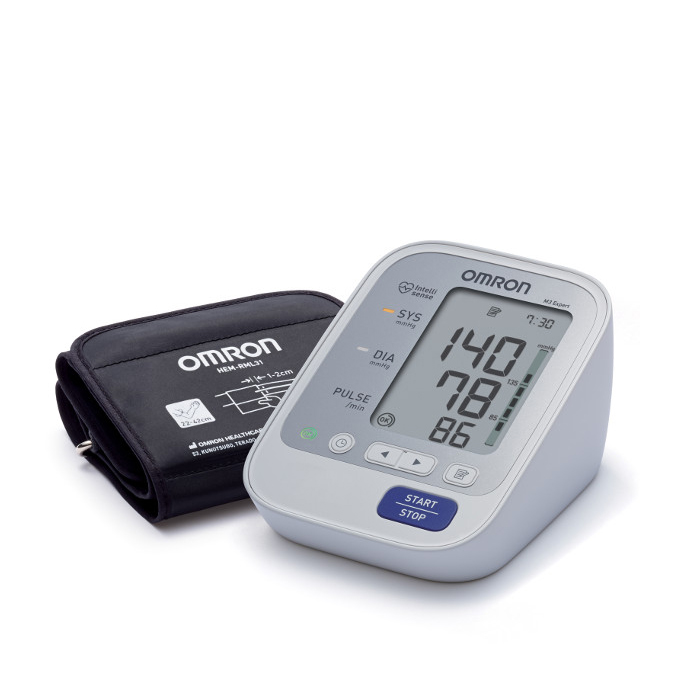
- large display
- soft cuff
- battery and mains operation possible
- memory for 60 measurements
- cuff fixing sensor
- heart rate measurement
- not found
This model is equipped with the IntelliSense function of intelligent measurement of blood pressure, which allows people with heart rhythm disturbance to get accurate indicators. This suggests that the device is ideal for people aged. An adapter is included. Additional functions - a clock and a calendar, which is necessary with regular monitoring of blood pressure.
Omron M2 Basic +
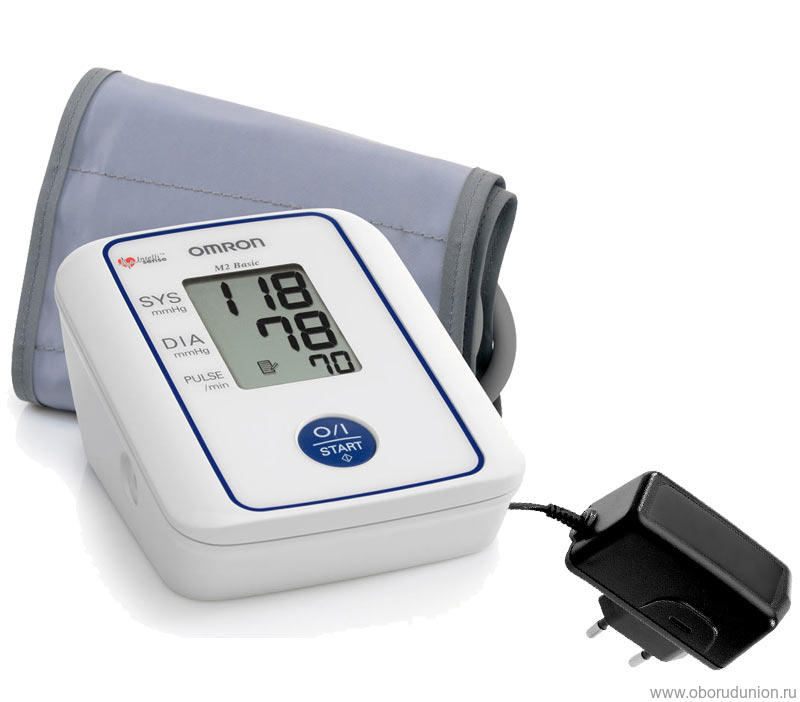
- universal cuff
- mains and battery operation
- large numbers
- memory for 30 measurements
- heart rate measurement
- not found
A fan-shaped cuff is connected to the device, which allows measuring blood pressure in patients of different weight categories. There is an opportunity to work with a children's cuff of 17-22 cm. There is also an intellectual dimension of IntelliSense. There is no adapter in the kit, but there is a connector for connecting it.
Voice assisted devices
B.Well PRO-36 (M-L)
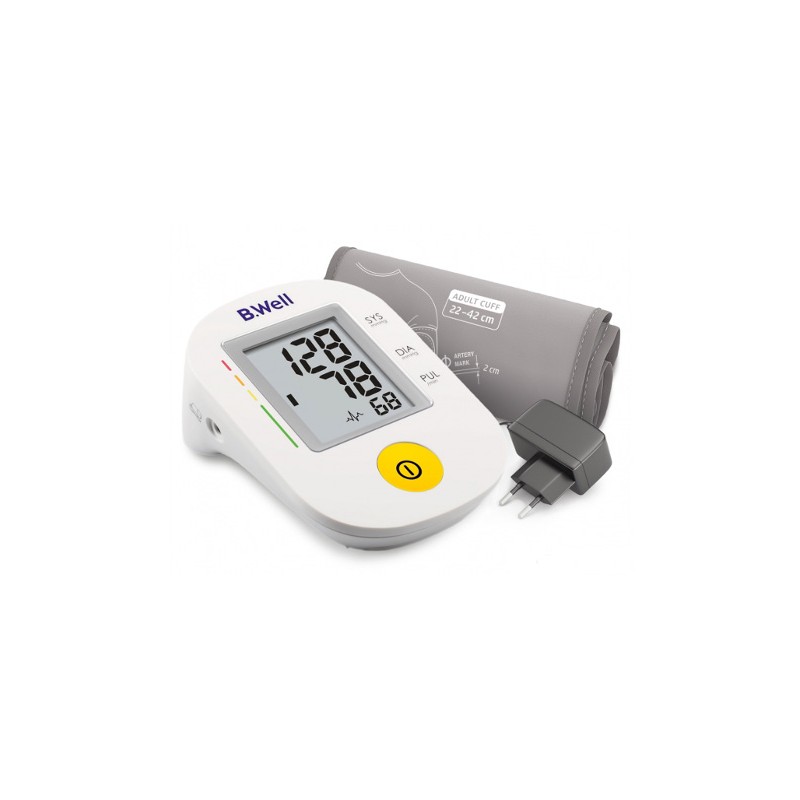
- enlarged cuff
- compactness
- voice accompaniment
- adapter included
- arrhythmia indication
- not found
Automatic device with a conical cuff on a shoulder. Measurement according to the classical Intellect Classic system. Memory is only for the last dimension. A big plus is voice guidance, this allows you to use the device in case of vision problems. Auto power off when not in use for more than one minute, which saves battery power. Adapter included. The manufacturer gives a guarantee of 5 years and 10 years of free service on the electronic unit.
AND UA-1300
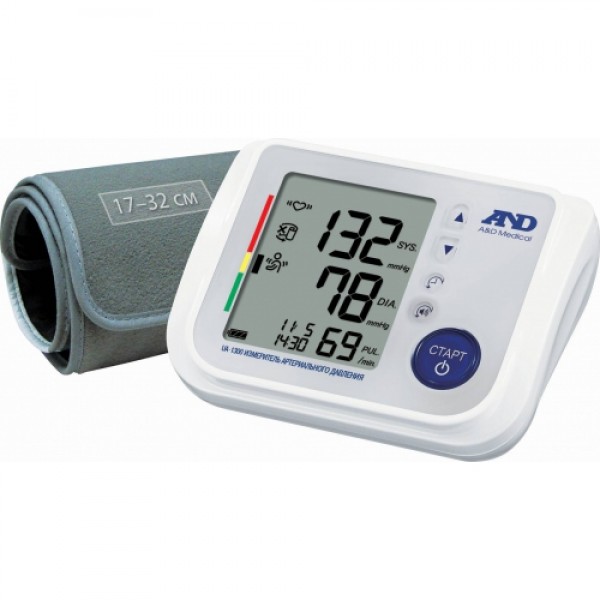
- voice accompaniment
- 10 year warranty
- large numbers and display
- pulse and arrhythmia indicator
- enlarged cuff
- cuff movement indicator
- no
An automatic blood pressure monitor is suitable for patients with diseases of the cardiovascular system. There is a function of intelligent control. It features a large monitor, braille on the instrument panel, universal cuff 23-37 cm. There is a low battery indicator. Network adapter included. Warranty on the main unit 10 years.
Wrist Instruments
Omron r2
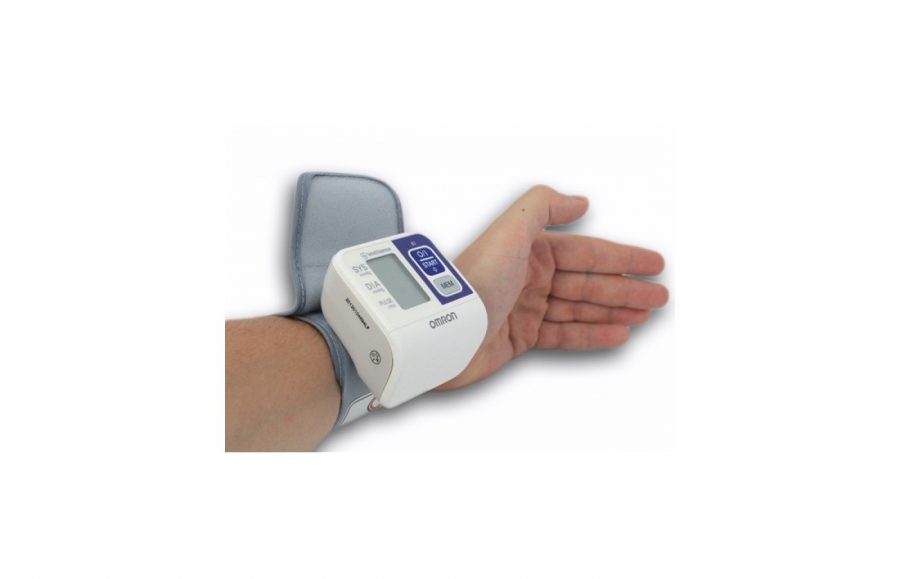
- compactness
- does not pump air
- indicator of arrhythmia and high blood pressure
- readout function
- ease of operation
- requires correct position when measuring
- possible error in readings
Memory for 30 measurements. Intellisense blood pressure monitoring technology. The soft cuff inflates smoothly without squeezing your hand, this allows you to use the device in children.
B.Well PRO-39
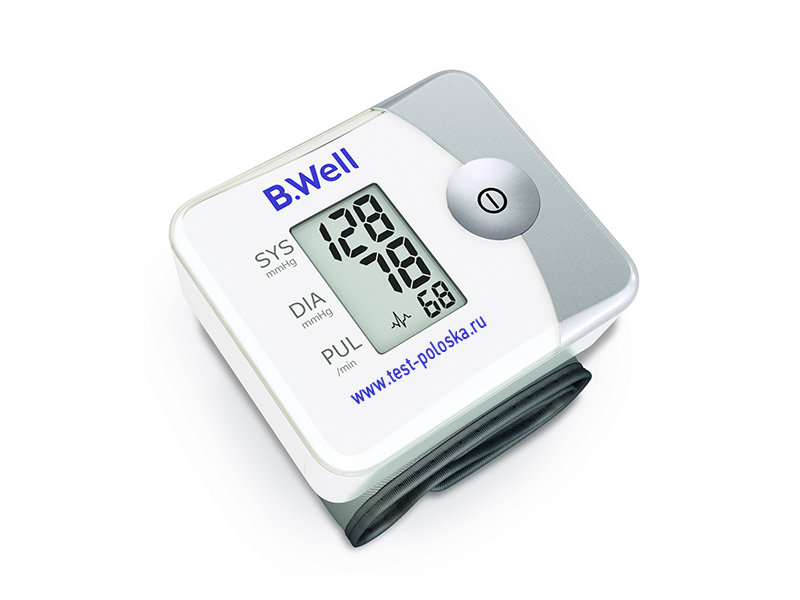
- compactness
- comfortable cuff
- picky big numbers
- one button control
- possible overstatement
The device automatically “remembers” only the last measurement, so it will not be suitable for continuous monitoring. There is an indicator of arrhythmia and battery discharge. Auto shut off when not in use.
An automatic blood pressure monitor with a cuff on the shoulder for people over fifty is a good choice. Whether additional functions are needed, this is purely individual, and depends on various factors. The carpal tonometer is not recommended for this category of patients, since there is a risk of inaccurate readings. Consultation with your doctor will help you make the right choice of the device, since the doctor knows the history, degree of hypertension or hypotension, the course of the disease, and, based on these data, tells you what type of device is right for you.