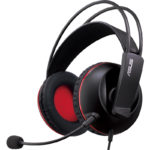
It is unlikely that active users of the headphones have ever paid attention to the existence of special “marks” of the manufacturer “L” and “R” on the outside of the “cup” of the accessory. English letters help a person identify the left and right earphones. But what do these designations really mean? How important is the use of the accessory in a particular ear for it - right or left? How to navigate, where is the headphone in the absence of appropriate labeling? Having studied the article below, the user will receive answers to these and other questions related to the determination of the party intended for the headset.

Why labeling headphones
Latin letters are abbreviations of the English words “Left” and “Right” (right and left), indicating the corresponding side of wearing the constituent parts of the accessory. These abbreviations are generally accepted and are used on the vast majority of headphones, regardless of their type, design or price category.
When searching for the answer to the question why manufacturers generally make the “notes” under consideration, it is important first of all to understand the essence of the basic property of the sound stream reproduced in the “ears”. Most often, when listening to music, high-quality audio books, watching movies, gameplay, the user is faced with stereo sound (a method of reproducing a sound stream with the inherent illusion of "volumetricity" or "spatiality" achieved by transmitting information through several audio channels). In other words, for example, when playing stereo sound in the game process, what is happening on the left side of the image displayed on the screen of the device connected to the “ears” will be output to the left earphone, and sounds from the right side to the right, respectively. A similar process will be observed in the sound of some music tracks, the recording of which uses more than one microphone.
With the monophonic sound of the audio stream transmitted by the accessory, the difference between the “ears” is leveled.
For the most clarity regarding the differences in sounds transmitted by the right and left headphones, it is worthwhile to introduce specifics in particular to audio of various genres and the importance of correctly determining the corresponding side:
- Games. In the vast majority of first-person shooters (for example, KS: GO), the result of the gameplay depends on how well the player hears the events happening around him and can navigate in space, relying on the rustles he hears. Accordingly, the distorted situation when the gamer hears the enemy on the right in the left “ear” is likely to cause failure or even loss in the round.
- Talk show. If the user has forgotten to check the correspondence of the labeling of the “cups” of the headphones to the ear in which they are actually located, then when watching various interviews, colloquial shows and so on, it is possible to “substitute” the voices of participants in a public dialogue (the person who is actually on the left side, will speak on the right and vice versa).
- Films. When viewing the expected, full of special effects of the blockbuster, the viewer will not get the proper pleasure without feeling all the sound "chips" prepared by people working on the film, if he can not correctly identify the right and left headphones. This is due to the fact that the positioning of the sound is violated and, as a result, the action on the screen does not match the audio stream audible in the headset. An even more obvious dissonance will be caused, for example, by the sound of the steps of a villain sneaking up from behind in front of the viewer watching a 3D film.
- Music. In addition to recording in two microphones, some musical genres imply instrumental ranking, which is obvious to music lovers.In the first case, when ignoring the “marks” that are written by the manufacturer on the product itself, the listener will receive distorted vocals; in the second, an imbalance in sound, and, as a result, a violation of the surround effect of musical instruments.
The above facts indicate the need to comply with the manufacturer's instructions for using the headset in the presence of stereo sound to preserve the sound design created by the "author" of the work. Ignoring marking is possible only with a single-channel transmission of audio information (monosound).
How to identify markings
Having understood the importance of the correct use of headphones, the user has a logical question: what to do if there is no factory marking of the right and left sides. There are several ways to recover information:
- The most reliable way to find out “affiliation of the ear” is a video test, which is freely available on the network. It is a broadcast of audio information in turn into each channel of the headset. At the moment the sound is sent to the right earphone, “Right” appears on the screen, and “Left” in the left.
- If it is impossible to use the above identification method, you can resort to a visual inspection. For example, in most cable headsets, the left earphone wire is slightly longer than the right.
- Also, due to the factory design, if you turn on the music and slowly connect the headset, placing the plug in the input on the device, the left earphone will sound first when there are stereo speakers.
- Another option for determining the correspondence of the sides of the “ears” is the fact that the right earphone is louder in the right ear than in the left ear and vice versa.
- Due to differences in the structure of the auricles in humans, the shape of most accessories is “fitted” to them, which makes it easy to determine the right and left earphones, focusing on the discomfort that occurs (or is absent) when placing the device in a particular ear.
Based on the above arguments, it becomes obvious not only the reason for labeling the product by the manufacturer, but also the importance of following it by the user during the operation of the headphones. If you comply with the requirements for marks “L” and “R”, the headset owner will receive high-quality surround sound with correct positioning, which guarantees him maximum comfort in the direct use of the device.