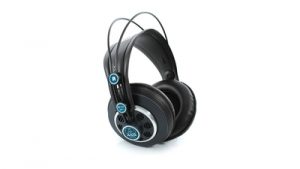
 The modern market of accessories for electronics, in particular headphones, is replete with its diversity:
- overhead or monitor;
- closed, open or half-open;
- cable or wireless;
- with a unique LED-backlight or in a classic black design and so on.
For professional use, the most popular at the moment are “monitors”. What is the difference between them and ordinary “ears” for listening to music daily? Can a monitor-type accessory really be considered the best? What features are typical for it? Having studied the article below to the end, a potential buyer will be able to get clear answers to these and other questions regarding the choice of headphones related to the monitor view.
Content
What it is
Under monitor headphones, as a rule, we mean a high-quality full-size accessory that accurately reproduces the sound. Usually this type of “ears” is used to create dj sets, to mix music or to arrange vocals at a recording studio. When writing tracks in a studio environment, it is important for musicians to hear every “roughness and flaw” of the recording in order to get the perfect “product” that can get to the top as a result of mastering. The range of reproduced sound frequencies for monitor headphones is comparable to the sound of large audio systems that are included in the rating of the best DJs and sound engineers for work.
The difference between monitor and false ears
"DJ" "ears" are significantly different from, for example, a gaming full-size overhead accessory. This fact is due to the implementation in the first newest acoustic sound technologies, which exclude the existence of a budget price category of “monitors”.
The most significant difference between the two types of headphones is the design of the product itself. The monitor accessory maximally covers the user's ears, while at the same time comfortably squeezing the head for maximum sound insulation. During operation of the overhead device, an elementary surface covering of the ears from external sounds occurs, without additional emphasis on achieving complete “immersion” in the process of listening to music or “mixing” of tracks.
The second important difference between a monitor device and its overhead counterpart is a direct focus on pairing with high-quality studio equipment, such as Hi-Fi and Hi-End. In the case of compatibility with conventional headphones, in most situations we are talking more about a stationary PC, game console, smartphone, and so on, rather than overall musical settings.
Well, the third, following from the previous two, unique feature of the “professional” accessory is its high cost in the market of goods. If certain models of overhead headphones can be characterized as inexpensive, then, intending to buy monitor counterparts, you need to be prepared to pay for high-quality assembly, appearance, high-quality detailed sound.
Kinds
The type of professional headphones considered in the article has its own internal classification according to the type of acoustic design:
- open (The most convenient class for direct use. The comfort is due to the “soft” covering of the ears, without explicit compression of the head while maintaining the sound quality of the reproduced sounds. However, when using the open type of “ears”, you should be prepared for low noise isolation, eliminating absolute “immersion” in process);
- closed (Ideal for creating songs in a recording studio, as they have the highest possible noise isolation for headphones existing on the modern electronics market.They are characterized by a tight rigid headband, due to the distortion of low frequencies in case of a loose fit of the “cup” to the ear);
- half-open (They are considered a subclass of the open type of headphones. Similarly with the first view, they are convenient to operate, provide average noise isolation and high-quality sound).
Ideal performance
Having made an elementary review of the basic characteristics of monitor headphones, a potential buyer will be able to easily choose the “ears” that best meet his needs. The main points requiring analysis before the direct acquisition of the device include its type, type of connection, impedance (resistance), sensitivity, amplitude-frequency characteristic (AFC).
- In appearance, as it becomes clear from the previous paragraph, for "home" use it is worth giving preference to an open accessory that combines wearing comfort and high-quality sound, despite the average noise isolation.
- When considering the type of connection, it is important to consider the purpose for which the selected headphones will be used. For example, the presence of the need for studio operation (home recording studios) means the feasibility of choosing a wireless option. While the “household” use allows the presence of a cable, due to the work with the “ears” exclusively close to the paired device.
- Monitor headphones used for professional purposes should have a high-quality indicator of resistance at the input of the accessory (impedance), in other words, be high-impedance (more than 100 Ohms), since their use involves interaction with stationary equipment with a high input voltage level. With the planned use of the selected device with smaller portable devices, you should make a choice in favor of low-impedance (from 16 Ohms to 50 Ohms) or additionally purchase special equipment - an amplifier. Optimum impedance guarantees loud sound with accurate frequency transmission.
- Sensitivity, coupled with resistance, is an indicator responsible for the volume of sound in the ears. However, in this case, the manufacturer does not have the task of endowing the product offered to the consumer with high sensitivity. Such a statement is explained by the presence of special amplifiers used in work at recording studios. For "home" there are also special devices that help recreate maximum volume. Accordingly, making the considered indicator of monitor headphones a decisive factor is not recommended.
- Considering the frequency response, it is important to note that when using the mentioned type of accessory not for its intended purpose, but, for example, for ordinary listening to music, the user should expect a “measured, sterile” sound without pronounced low or high frequencies. This fact is due to the emphasis placed by the sound engineers who created the track in the studio on the middle frequencies, vocals and instrumental parts in order to “please” the majority of music lovers. The optimal indicators of the frequency range of monitor headphones are considered to be 20 Hz - 20 kHz, which are the most comfortable in sound for the human ear. Numbers lower or higher than this segment are not perceived by the human body reliably, respectively, such characteristics declared by the manufacturer can be considered a marketing move to attract “naive” customers.
Rating
When deciding to buy a particular model of monitor accessory, you should pay attention to the list of top “ears” that belong to the middle price category, according to the version of “professional” music lovers and studio musicians.
Sennheiser HD 280 Pro
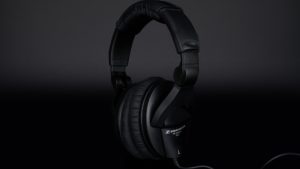
- Type: full-size, closed
- Frequency range: 8 Hz - 25 kHz
- Impedance: 64 ohms
- Sensitivity: 102 dB
- THD: 0.1%
- Cable length: 1 m (with the possibility of stretching up to 3 meters)
- balanced sound
- design
- high-class sound insulation
- reliable build quality
- heavy wire
- rigid headband design
Relatively cheap monitor headphones for home use in their segment, providing high-quality sound stream transmission and maximum isolation from the outside world.
Sony MDR-7506
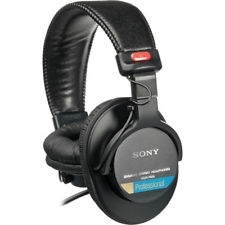
- Type: full-size, closed
- Frequency range: 10 Hz - 20 kHz
- Impedance: 63 ohms
- Sensitivity: 106 dB
- THD: 0.3%
- Cable length: 1 m (with the possibility of stretching up to 3 meters)
- precise frequency transmission
- maximum sound insulation
- ergonomic design
- build quality
The perfect combination of simplicity of design with a powerful technical component that can satisfy the most demanding connoisseur of accessories of a monitor look.
Audio-Technica ATH-M50x
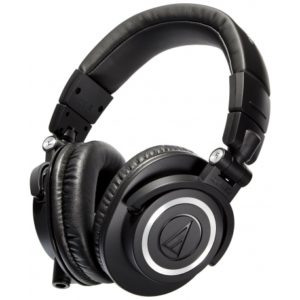
- Type: full-size, closed
- Frequency range: 15 Hz - 28 kHz
- Resistance: 38 Ohm
- Sensitivity: 99dB
- THD: 0.1%
- Cable length: 1.2 m (with the possibility of stretching up to 3 meters) / 1.2 m straight / 3 m straight
- balanced frequency transmission
- perfect sound insulation
- "Rich" equipment
- limited headband size adjustment
- plastic construction causing rapid wear on the accessory
- low ergonomics
Perfect for music lovers or novice musicians, due to the combination of convenience for "home" operation and an extensive frequency panorama of sound.
Bose QuietComfort 35
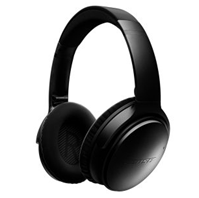
- Type: full-size, closed
- Frequency range: 20 Hz - 20 kHz
- Impedance: 32 ohms
- Sensitivity: 115 dB
- THD: 0.1%
- Cable length: 1.2 m (+ availability of autonomous use)
- build quality
- comfort with prolonged use
- the ability to disable the active noise reduction function
- long battery life
- easy to use wireless option
- mediocre sound transmission for a product of this price category
- lack of equalizer
Monitor headphones, close in quality to professional studio equipment, offered by suppliers at a relatively affordable cost compared to competitive models in the market of electronic accessories.
Beyerdynamic DT 990 PRO
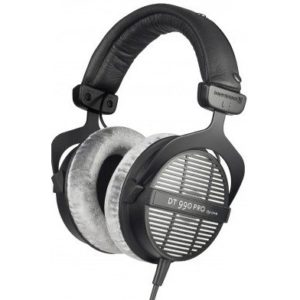
- Type: full-size, open
- Frequency range: 5 Hz - 35 kHz
- Impedance: 250 Ohm
- Sensitivity: 96dB
- THD: 0.1%
- Cable length: 3m
- build quality
- detailed surround sound
- lack of discomfort during prolonged use
- hard cable
- low noise isolation
- the need to buy an amplifier due to the high resistance of the headphones
A robust design that guarantees long-term service of the monitor headphones in question with a “clear” sound is the main requirements of most potential buyers when choosing a suitable device that are fully satisfied with this model of accessory.
In the choice of monitor headphones, it is first of all necessary to understand their original purpose, which consists in working at professional recording studios or at a DJ console. Accordingly, to activate the maximum level of each of the technical characteristics of the selected accessory in operation, it is important to be prepared to purchase additional equipment, in particular a high-quality amplifier. Subject to the manufacturer’s requirements, the use of monitor headphones even in “home” conditions will give the user not only the maximum isolation from ambient noise, but also the purest sound, comparable to the work of expensive studio equipment.The basic indicators of the accessory listed in the above article will help you make the right choice of monitor headphones that can fully satisfy the needs of its owner.
 |  |  |  |  |
|
| Title | Sennheiser HD 280 Pro | Sony MDR-7506 | Audio-Technica ATH-M50x | Bose QuietComfort 35 | Beyerdynamic DT 990 PRO |
| Frequency Response Range | 8 - 25000 Hz | 10 - 20,000 Hz | 15 - 28000 Hz | 20 - 20,000 Hz | 5 - 35000 Hz |
| Sensitivity | 102 dB | 106 dB | 99 db | 115 dB | 96 dB |
| Impedance | 64 ohm | 63 ohm | 38 ohm | 32 ohm | 250 ohm |
| The weight | 220 g | 226.8 g | 285 g | 310 g | 250 g |
| Membrane diameter | - | 40 mm | 45 mm | - | - |
| Price | from 5450 rub. | from 6800 rub. | from 8900 rub. | from 23800 rub. | from 11600 rub. |

And why the lack of an equalizer is a minus only for the Bose QuietComfort 35. What other headphones does it have?)