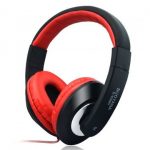
Children's hearing is very sensitive to loud sounds, so the choice of headphones must be taken with extreme seriousness. They should be made exclusively of safe materials, and also have an appropriate design. How headphones for children differ from ordinary ones, and how to choose them correctly, we will tell in this article.
Content
Features of children's headphones
According to statistics, only 2 out of 1000 children have birth defects in the hearing aid. The rest of the problems arise due to ignorance and non-compliance with elementary safety rules. Adults can independently determine the necessary volume level. They feel when the music begins to bring discomfort, and in time pull the device out of their ears. In children, the hearing is not fully formed, so the responsibility for their health rests with the parents and close relatives.
To begin, talk with your child and explain that headphones are not a toy and you need to be serious about them. Indicate the acceptable volume limit and set the time frame. As mentioned earlier, conventional headphones for a child are not always suitable. Here are some of the features inherent in children's models:
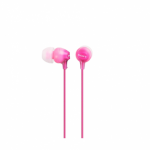
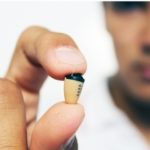
- The range includes only overhead and full-size models. Headphones that are too close to the eardrum are not suitable for children. They adversely affect not only hearing, but also brain activity. It is better to choose devices that are superimposed on the ears, rather than sticking deep into the ear canal.
- Bendable or adjustable design. Devices should not squeeze the head. It is better to choose models with an adjustable size or not too tight arch.
- Low threshold of sound. Children's models have a low sound threshold of up to 90 dB, while the sensitivity of adult devices sometimes steps over 110-115 dB.
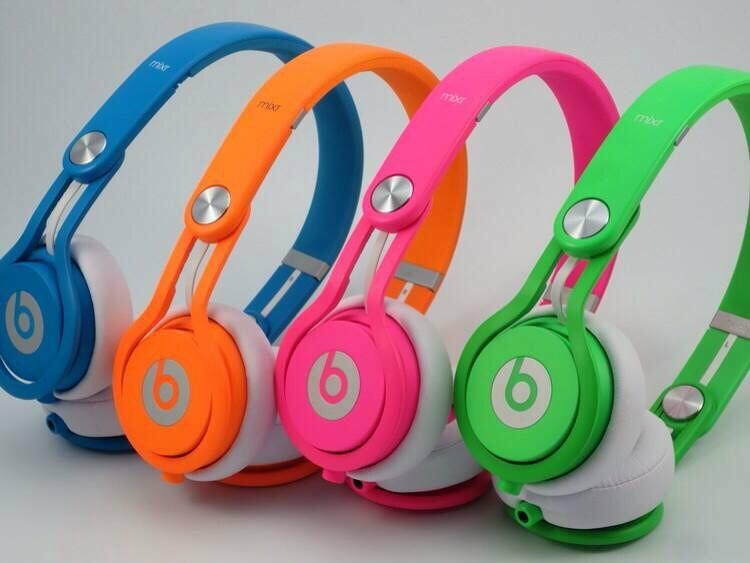
- Bright body design. Children's devices often have a bright case with images of cartoon characters or other characteristic things. But there are also minimalist models that differ from adults, except for the size of the overlays.
- Hypoallergenic (safe) housing materials. If the device says “baby”, be sure that it is safe and will not cause an allergic reaction. Of course, it’s better to trust trusted brands.
- Small dimensions. The size of the baby’s head is very different from that of an adult. Children grow up quickly, so each age category needs its own headphone size. Usually manufacturers indicate the recommended age in the characteristics of the product.
Are regular headphones suitable for a child?
You can buy a child ordinary headphones if he promises to comply with safety rules. Namely:
- The volume level should not be above average.
- The time for listening to music should not exceed 4 hours at a moderate volume.
- Do not fall asleep in the headphones.
- Headphones must be removed in busy sections of the street and when crossing the road.
- Do not use in the bathroom or shower.
It’s worth thinking about purchasing special children's headphones because the child will not always obey his parents and follow all the recommendations. In addition, some manufacturers make their devices shockproof in case children are too active. There are even waterproof models, but they will cost several times more.
What to consider when choosing children's headphones
When choosing children's and teenage headphones, it is necessary to consider not only the sound characteristics, but also the design, ease of use, and also the quality of materials. Here are the main points that you should pay attention to:
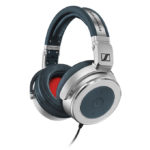
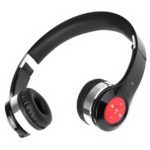
- Headphone design. There are four main types of headphones - overhead, full-size, vacuum and in-ear. Children's models should not be placed too deep in the ear canal, so earbuds and vacuums are not suitable. A good choice would be overhead headphones that press the cups to your ears using a foldable arc. There are models with an adjustable size, they can be taken "for growth."
- Sensitivity. This parameter is responsible for the maximum volume of the headphones. Children's models should have an average sensitivity of up to 90 dB. Some manufacturers do not put restrictions on their devices, however, the volume must be indicated.
- Frequency range. The range of reproducible frequencies does not play a role in security matters, but it provides comfortable listening to music and watching video files. Choose models with a range of 18-20,000 Hz.
- Convenience. Headphones should not squeeze your head or sit too loose. Before buying, it is better to check whether the child is comfortable wearing the selected device.
- Coloring and shape. When choosing a design, it is better to focus on the preferences of the child. There are many models stylized for all sorts of helmets and crowns. Which one is better is a matter of taste.
- Safe composition. Choose devices from safe materials. It can be durable plastic and metal alloy. If the child is small, there should be no protruding parts and chips in the structure.
Rating of the best headphones for children and adolescents
Introducing the top 10 best children's headphones, which are distinguished by a safe composition and an acceptable level of sensitivity:
JBL JR300BT
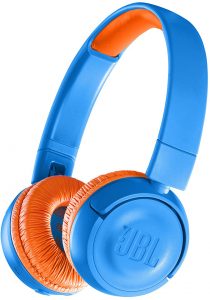
- Type of device: baby on-ear bluetooth headphones
- Emitter Type: Dynamic
- Frequency range: 20 - 20,000 Hz
- Sensitivity: 85 dB
- Battery Life: 12 hours
- Impedance: 32 ohms
- Type of construction: folding
- Weight: 113g
- simple and clear sound;
- bright case design;
- lightweight folding construction made of durable plastic;
- long battery life.
- there is no possibility for a wired connection;
- You cannot adjust the sound on your own.
COLOUD C22M
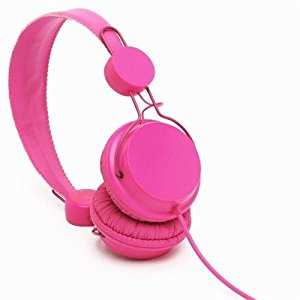
- Type of device: full-size children's headphones
- Emitter Design: Dynamic
- Frequency range: 20 to 20,000 Hz
- Volume: 114 dB
- Battery Life: 12 hours
- Impedance: 32 ohms
- Power: 20mW
- Cable: twisted, single sided
- good sound quality;
- bright design with the image of Hello Kitty;
- affordable cost;
- high-quality twisted cable.
- no limit on sensitivity;
- average quality of the materials used.
Genius HS-935BT
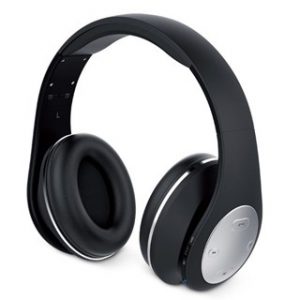
- Type of facility: foldable over-ear headphones
- Emitter Design: Dynamic
- Frequency Spectrum: 160 - 20,000 Hz
- Volume: 82 dB
- Battery capacity: 450 mAh (14 hours battery life)
- Impedance: 32 ohms
- Cable type: detachable
- Light indication: yes
- Weight: 189g
- high sound quality via Bluetooth;
- stylish case design;
- high-quality assembly;
- the possibility of wired work.
- unstable wireless connection;
- put pressure on the ears.
Marley positive vibration
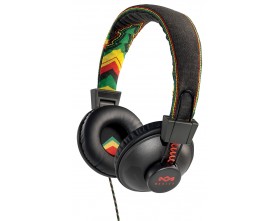
- Device type: full-size headset
- Emitter Design: Dynamic
- Range of reproduced frequencies: 17 - 20 000 Hz
- Sensitivity: 115 dB
- Cable Type: Single Sided, Fabric Braid
- detailed and rich sound;
- high-quality materials;
- the wire is protected by a winding;
- excellent noise reduction and soundproofing.
- strongly compress the ears;
- overpriced.
Philips SHK1031
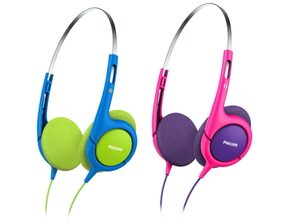
- Device type: wired on-ear headphones
- Emitter Type: Dynamic
- Frequency range: 10 - 24,000 Hz
- Sensitivity: Limit to 85 dB
- Impedance: 32 ohms
- Ultimate Power: 100mW
- Optional: available volume control, neodymium magnets
- wide range of reproduced frequencies;
- bright case design;
- there is a volume control;
- good build.
- uncomfortable fit;
- rigid headboard made of metal.
MindKOO Wireless Cat Ear Headfones
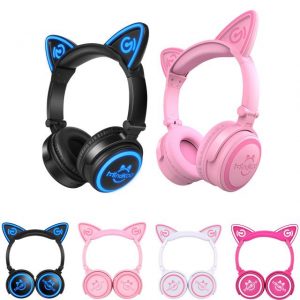
- Device type: overhead headset for girls
- Emitter Design: Dynamic
- Wireless Type: Bluetooth
- Impedance: 16 ohms
- Noise Reduction and Soundproofing: Yes
- Frequency Response Spectrum: 20 - 20,000 Hz
- Compatibility: iOS, Android, Windows
- Sensitivity: 120 dB
- Wireless Connection: Bluetooth (10 meters)
- bright appearance with LED backlight housing;
- stable wireless connection;
- lightweight and comfortable body;
- excellent active noise reduction and sound insulation.
- the microphone is not built-in, but a separate one;
- thin cable for charging from the network.
Glowing Cat Ears Headfones
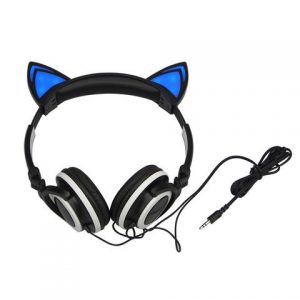
- Device type: full-size headset with microphone
- Emitter Design: Dynamic
- Pairing Type: Bluetooth
- Impedance: 16 ohms
- Noise Reduction and Soundproofing: Yes
- Frequency spectrum: 20 - 20 000 Hz
- Compatibility: iOS, Android, Windows
- Volume: 103 dB
- Cable Type: Single Sided, Fabric Braid
- beautiful design with backlight headboard;
- stable wireless connection;
- folding case design;
- excellent active noise reduction and sound insulation.
- average sound quality;
- battery life does not exceed 5 hours.
Anime Bluetooth Headfones
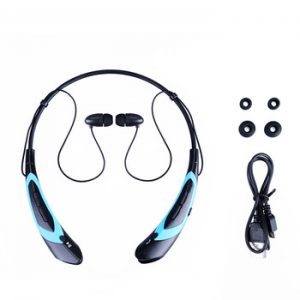
- Headphone Type: Baby with Microphone
- Emitter Design: Dynamic
- Frequency spectrum: 20 - 20 000 Hz
- Limit Resistance: 32 Ohms
- Volume: 42 dB
- Mount Type: Ear
- Wireless Connection: Bluetooth
- detailed and rich sound;
- stylish design with bright backlight;
- quickly charge from the network;
- excellent noise reduction and soundproofing.
- unstable wireless connection;
- weak magnets on the mount.
Output
The main difference between children's headphones and ordinary ones is the volume limit of up to 85 dB. It is better to choose models with soft ear pads and pads. They will not put pressure on the ears and cause discomfort to the child. For boys, bright devices in blue and blue shades are suitable, and for girls, delicate models with their favorite characters. Of course, it is better to consider the preferences of the child.
 |  |  |  |  |  |  |  |
|
| Title | JBL JR300BT | COLOUD C22M | Genius HS-935BT | Marley positive vibration | Philips SHK1031 | MindKOO Wireless Cat Ear Headfones | Glowing Cat Ears Headfones | Anime Bluetooth Headfones |
| Frequency Response Range | 20 - 20,000 Hz | 20 - 20,000 Hz | 160 - 20,000 Hz | 17 - 20,000 Hz | 10 - 24000 Hz | 20 - 20,000 Hz | 20 - 20,000 Hz | 20 - 20,000 Hz |
| Sensitivity | 85 dB | 114 dB | 82 dB | 116 dB | 106 dB | 105 dB | 11 dB | 107 dB |
| Impedance | 32 ohm | 32 ohm | 32 ohm | 16 ohm | 32 ohm | 32 ohm | 36 ohm | 32 ohm |
| The weight | 113 g | - | 189 g | 190 g | 130 g | - | - | - |
| Membrane diameter | 32 mm | 40 mm | 40 mm | 50 mm | 32 mm | - | - | - |
| Price | from 2200 rub. | from 1000 rub. | from 2100 rub. | from 3400 rub. | from 650 rub. | from 1850 rub. | from 1150 rub. | from 700 rub. |