Every housewife dreams of a convenient and multifunctional assistant in daily cooking for the whole family, of course, so that she also has a stylish, modern design. If your house is not connected to the city gas pipeline, an induction stove, or an electric one, is suitable for you.
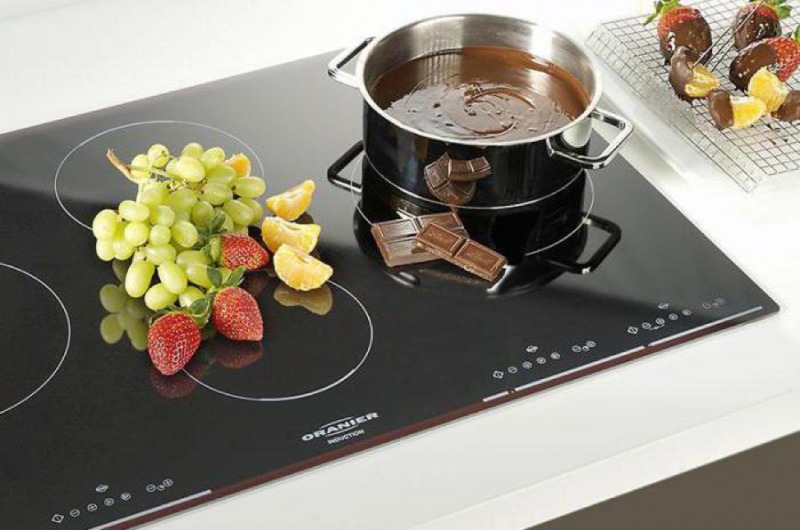
Which one is better and more economical, because they are both powered from the mains. To answer this question and find out all the positive and negative sides of each model, we recommend reading our article.
Content
Differences
The main difference is the principle of heating the original devices in their own way.
The electric stove first heats the burners to a temperature set by the user, and then transfers heat to the dishes installed on them.
In the induction model, everything is diametrically opposite: special assembly coils create an induction eddy current that heats the bottom of the dishes, and then the contents. The hob remains cold and heats up in the process of cooking only from the dishes.
The heating system is the main difference between these electric models, not to mention the internal structure and individual parts. It is impossible to install an electric burner separately from the entire body of the product, and induction panels, with some modifications, are freely located in the countertop of the kitchen table and function perfectly.
Comparison of electric stove and induction panel
Each of the options presented has pros and cons, which we will talk about separately. There are individual, characteristic features only for them, users need to pay attention to them before purchasing.
Induction panel
- The cost is quite high, but due to the high savings in energy consumption, all costs are paid off, according to experts, on average during the first year of operation.
- No time is required to heat the hotplates.
- Automation shuts off the current supply, if not on the surface of the cookware panel
- Users can set the temperature with an accuracy of 1 degree and set the cooking time.
- Simple operation - no special care is required, since there is no burning on the surface.
- For proper cooking, you need special dishes with a perfectly flat bottom, made of cast iron or steel.
- When in contact with the induction model, you need to remove the watch so that it does not magnetize, as well as all the jewelry, so that when heated they do not burn your skin.
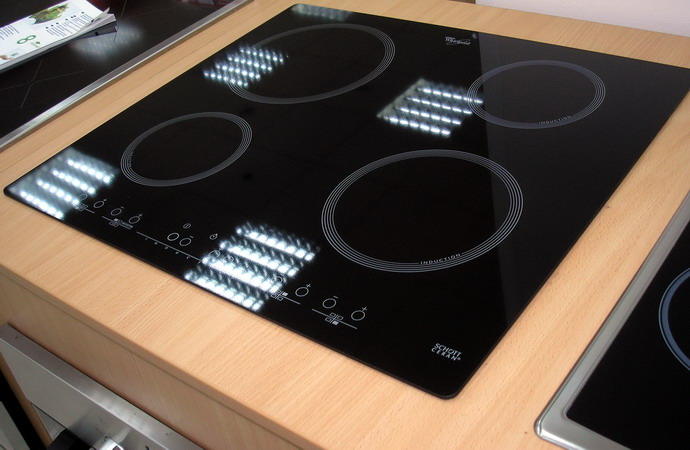
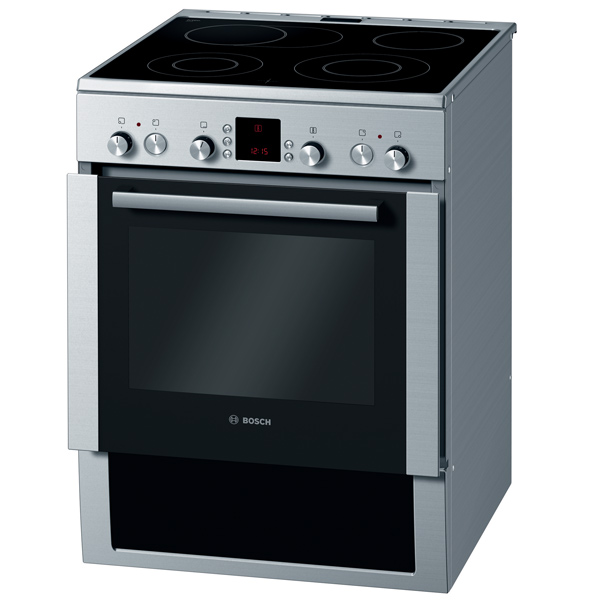
Electric cookers
- They cost much less and work silently.
- You can use almost any dishes without restrictions.
- The hot plates heat up for a long time, but they cool down slowly, which is very much appreciated by many experienced professional chefs: you can leave the dish "go" on the stove already turned off.
- They have a high degree of fire hazard and traumatic burns.
- Power consumption is significantly greater than the induction model.
Each model has individual advantages, as well as disadvantages, therefore, when choosing, you must compare all the nuances.
Pros and cons of the electric model
We already discussed the principle of heating the burners, so we immediately turn to what's better with electric stoves:
- There are no combustion products, like a gas counterpart.
- Silent functioning.
- Convenient and easy to use.
- A wide range allows you to make the necessary selection of heating elements, the number of burners, type of control.
- Acceptable cost to consumers.
There are a number of disadvantages:
- power consumption is quite significant, because the burners warm up for a long time to a maximum temperature;
- strong heat can be a source of accidental burns;
- full warm-up time is quite long - 4-5 minutes;
- water boils after 10-15 minutes of active heating;
- long cooling helps to create a greenhouse effect in the kitchen in the summer.
If the family has small children, it is necessary to close the doors to the kitchen during cooking and in the process of cooling rings after a long work.
Advantages and disadvantages of the induction panel
This hob modification has the following positive qualities:
- Low consumption of electric energy.
- The surfaces of the hobs are heated from the dishes no higher than 50-60 degrees.
- The entire surface during the cooking process remains cold.
- Unique safety - when small items from the table set hit the stove, the burners do not turn on.
- There are several operating modes in the arsenal.
- Water boils after 5 minutes, while the energy consumption is not higher than 0.35 kW / h.
- Quick heating of dishes for a minute due to the use of eddy magnetic currents.
- If there is no water in the pan or in the pan, the automatics cuts off the current supply.
Like any technology, there are some negative aspects:
- coils may emit a slight buzz during operation;
- high price;
- need special dishes made of cast iron or ferromagnetic alloys;
- the surface of the panel is afraid of point hits - it instantly splits and becomes unsuitable for further use.
In new model designs, noise practically does not occur, but special dishes with rather thick walls should be used - just thin-walled products create noise, and not the stove itself.
Which stove is more economical
Everything is simple here: induction models are characterized by instantaneous heating and similar cooling - if the current is turned off, then the induction coils do not generate magnetic flux, and there is no heating of the bottom of the dishes. When the user adjusts the temperature, its change occurs instantly - there is no need to wait until the burner warms up or cools down, because the dishes are heated, and not the burner surface, which is limited in red on the panel.
Therefore, the conclusion is quite simple: electric energy is used more efficiently by induction panels, so paying bills is much less. These models are considered much more economical, for comparison - electric ones use energy 1.5 times more.
Induction Cooker Benefits
We have already dealt with the positive qualities and disadvantages of these stoves, now we will list their advantages in comparison with electric models:
- Induction panels are safe for children and pets, because without the presence on its surface of special and non-empty dishes, heating does not occur. An unattended equipment is incapable of burning or provoking a fire, and the automation disconnects it completely from the network after half an hour if the user does not show any activity.
- Compared with conventional electric stoves, they do not need a certain time to heat up - 2 liters of water boils in 5.5 minutes, which is not available to other analogues.
- Another important advantage is a simple cleaning, since the hob never heats up, it is impossible to burn food on it. Therefore, it can be regularly cleaned with a damp sponge and a dry soft cloth - a huge difference with the cleaning of electric models.
- These models consume much less energy, so the savings in utility bills are quite noticeable.
Induction panels have one unique feature - the “booster” mode, which allows you to briefly direct the entire power of the product to one burner, greatly increasing its productivity for efficient use.
The nuances of the right choice
The range of modern stoves for domestic use is quite wide, so making the right choice for the consumer can be difficult. We present to your attention the main differences between electric and induction models:
- The main difference is the principle of operation of both options. The electric stove first heats the burners, and then the dishes installed on them. The second option uses the principle of electromagnetic induction: copper coils, which are located under the panel, activate eddy magnetic currents that heat the bottom of special dishes. Food is cooked, and the surface of the stove remains the same temperature.
- Any utensils are used to cook food in an electric furnace, and only with ferromagnetic properties on an induction panel, kitchen utensils made of non-ferrous metal are not suitable.
- Until the dishes fill 70% of the cooking area, the induction model does not start to work, and there will be no effect if it is empty. Clever appliances do not pay attention to small items of kitchen utensils, which has a very positive effect on general safety, especially when the family has a younger generation that is very curious.
- The cooking speed of any dishes on the electric model is much lower than that of the induction panel - this is due to the difference in the technological process.
- The induction option has some negative nuances: it is not recommended to install them near other household appliances (washing machine, refrigerator or oven), because the specifics of the product can inadequately affect their functionality.
If in your kitchen utensils with ferromagnetic properties already prevail, you have the financial ability to purchase new appliances in the kitchen without much damage to the family budget, then you can safely choose an induction panel and enjoy the benefits of innovative technologies.
findings
The induction panel is an improved technological variant of the electric stove familiar to users, only heating here does not occur in a spiral, but directly in the bottom of the dishes. Their difference is that the first is considered more economical, practically safe and easy to operate. But for her, special dishes are needed.


“A technician left unattended is incapable of provoking a fire”
incapable of red-hot pan with steamed borsch? I think capable. And an ordinary electric stove is capable. It seems that food inside the metal burns and the fire cannot spread anywhere, but fires do happen ..
where you saw induction cookers where you can set the temperature with an accuracy of 1 degree. real: 60 gr. 200 wat 80-90 gr. 400 wat, etc. do not fool people.
GOOD advertising thanks, check prices for cookware and hobs.
What nafig coils buzz on the induction panel? There is also a pretty cool fan buzzing! Even after turning off the stove, it works for about another minute. Here, in the buzz, perhaps the whole drawback of such a stove, especially since there are no shortages of any vessels with an induction bottom of the pond. And for steel and cast iron in general, especially the bottom is not necessary
Once I tried to cook at the induction of a friend and everything, I realized that this is mine. the safest thing in the world. even if you remove the pan and forget to turn off the pan, the stove will automatically turn off everything for you. so I immediately ran to buy myself an induction hotpoint, like my girlfriend.
I'm just in love with an induction cooker! It was created just for me.All my life I dreamed of such a thing, although I had no idea that such a thing was possible. It is simply not possible to stain her. I have been using it for 5 years and am happy. Rubbed with a cloth and that's it! Nothing burns. Heats up instantly, no need to wait. Water begins to boil in just a few minutes. There are boiling milk functions, set and forget, will not run away. Also a Cook function. The only thing that upset me was that one disk immediately failed, or rather it works, but it often turns off and the F1 error lights up, it seems. I can’t fix it myself. And until I figured out what to do. And I live far from the city and repair.