The market for SLR cameras is diverse in both functionality and price. In order to choose the optimal model of the camera, you need to determine the purpose of the purchase. Only amateur cameras are universal. Therefore, it is important to purchase the most suitable device, because it can not be called a cheap product.
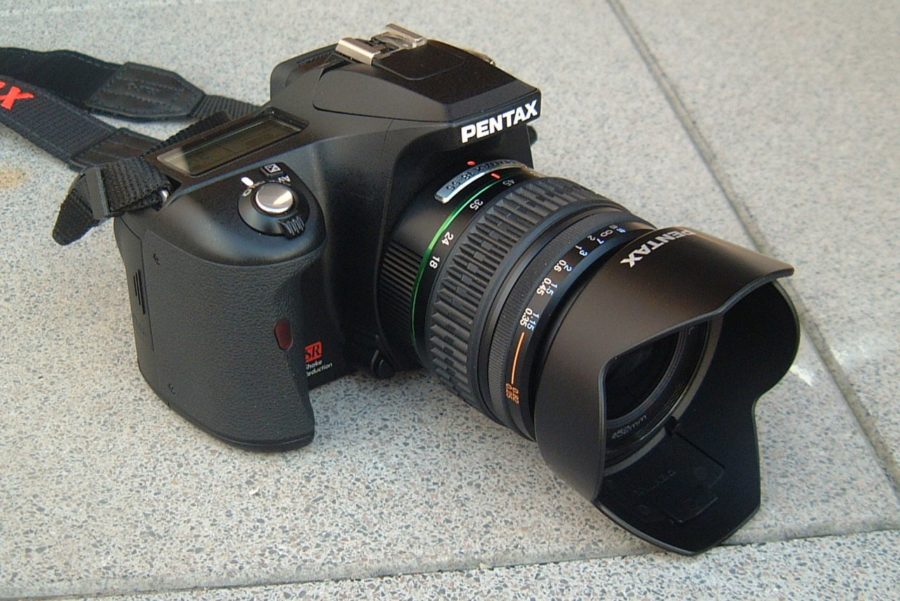
The most popular camera applications are:
- Photographing on documents.
- Journalism.
- Advertising photography.
- The shooting of solemn events.
- Art photography.
Content
The camera for photographing documents
The specifics of photographing documents do not include shooting in motion, from a long distance, and printing on wide-format paper. Such conditions significantly reduce the requirements for the camera. Therefore, some photographers do not disdain even cheap, amateur DSLRs for such purposes. But if a photo studio claims to be the best in its city, you cannot do without a professional camera. In our country, the standard size is 3 by 4 for photos on documents. Therefore, when choosing a device, you should not overpay for a full-sized matrix. Chasing a high number of pixels is also not reasonable. For shooting from a distance of up to 5 meters, 10 megapixels will be more than enough. In addition, even the basic modern professional DSLR has more megapixels on board.
Photo salons are rarely placed outdoors, and you have to shoot in the dark. So you need to buy a camera with a high sensitivity matrix, over 20,000 units. For the same reason, a flash is required for the camera. Semi-professional is best suited. Its design allows you to rotate the head, which will not blind customers when they look at the lens, and save the photographer money, since it is much cheaper than a professional, and a high recharge speed is not needed here.
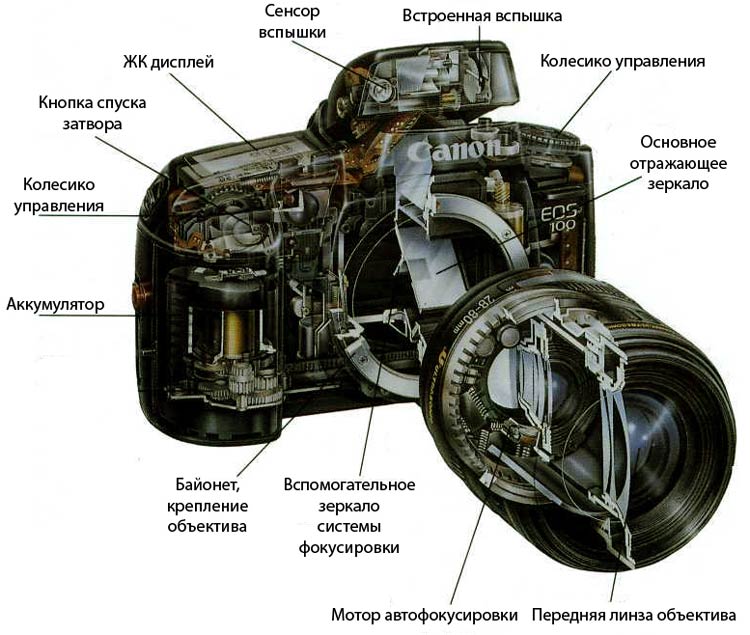
One of the important parts of the camera is the lens. He is responsible for the sharpness and sharpness of photographs. In fact, the better the lens, the less work will be left on retouching the already captured material. For the needs of photographing documents, a standard lens is enough. For an incomplete matrix, a 35 mm lens will be standard. Although the "native" lens of a semi-professional camera usually meets the above requirements.
Photography for journalism
The work of a journalist is associated with constant movement. He does not know when and what he may need to shoot. Moreover, high-quality photographs on the front page of the newspaper may well come in handy.
Therefore, a journalist will not save much on buying a camera. For professional shots, only a camera with a full-format matrix is suitable. To shoot in motion, you will need the highest light sensitivity over 25,000 units and focus retention function. A journalist may need to shoot both portrait photographs and landscapes. Depending on the nature of the shooting, professional photographers use different lenses, and even apply filters. But the journalist does not have the opportunity to carry a darkroom with him everywhere, so you need to do with one lens.
A full-time lens is unlikely to satisfy all the needs of a fourth-power representative. But a professional full-format lens with universal zoom and full manual adjustment will help you to make high-quality images in any situation.
A journalist also comes in handy with a powerful light intensity flash with TTL mode, which adjusts the brightness and diffusion of light from the flash depending on the exposure. In manual mode, the press officer will simply not have time to analyze everything. The flash should have a short recharge time and auto zoom, because depending on the situation, the photographer will constantly change the focal length and take many frames, of which only a few will be printed.
A neutral filter will also be useful for a journalist, which will protect the lens from dust and dirt, which is inevitable in constant trips. An important factor will be the weight of the device. It is believed that the heavier the camera, the better. It is understandable, because heavy weight indicates a large percentage of metal, and therefore strong, parts. But there are also reliable lightweight cameras. For a small weight you have to pay extra, but for the journalist it matters.
Advertising photography
The camera of an advertiser must have the same functionality as the camera of a journalist. But in addition, it should produce high-quality wide-format photographs not only of size A1, but also for billboards. The main difficulty of widescreen photography is to avoid blurring of secondary elements when focusing. Most SLR cameras do not cope with this task. Of course, on A4 and even a3 prints, such flaws are slightly noticeable. But on a large scale, they will look ugly. Therefore, the advertiser should have a camera from the top list with a full-format matrix with at least 25 pixels, a wide-angle lens with different color-changing filters. For example, an advertiser will need an exoticcolor filter, which emphasizes the desired color, attracting the attention of potential buyers.
Celebration Events
At festive events, especially weddings, you have to shoot in the dim light, in the company of amateur photographers who can spoil high-quality pictures with their "soap dishes" with an acrid flash. To prevent this from happening, the wedding photographer should have a camera with a large aperture, a professional flash with a light scattering function, and an anti-glare filter on the lens. There is always a lot of competition in the market for wedding photographers, so everyone is trying to get the most pathosy and expensive camera possible and bring this information to a potential customer. In fact, expensive wedding cameras can stand out among their more modest counterparts only if the newlyweds jump with a parachute or sign underwater. In other cases, wedding shooting takes place in relatively measured conditions, where a good photographer and with a semi-professional camera will take high-quality pictures.
Art photography
Photographer is the very first profession related to photography. Initially, even photography was called a photographic picture or a photographic portrait, depending on the content. Photographers have a special relationship with cameras. They believe that with any camera you can take decent photos if the photographer is talented and knows how to handle it. There is even an art photography technique on a mobile phone camera. But often photographers prefer a reflex camera with a universal lens to show their skills, rather than the technical capabilities of the device. But photo artists do not disdain neutral and polarizing filters to protect the camera and so that the weather does not affect their creative intent.
Which brand camera to choose
Among the photographers, a real "holy war" between supporters of different manufacturers of photographic equipment is raging. Each of them is ready to prove why his brand is better than others.In fact, everyone has their own best professional camera, and this does not depend on the brand, but on how clear and convenient it is for the photographer.
For years, Canon and Nikon products remain the leaders in the ratings of the best cameras.
The American company Nikon has existed for over 100 years and specializes exclusively in photographic equipment. A good choice of a camera of this brand is the model Nikon D7200beating popularity ratings. This camera is equipped with a unique autofocus system that allows you to take a detailed photo in the dark and in motion. High aperture and 24-megapixel sensor add appeal to this device. Its full-time lens has built-in Nikon proprietary effects that can personalize photos. The device has advanced communication capabilities. Wi-fi and nfc modules provide convenient pairing of the camera with a computer.
Among the cameras of the Swedish company Canon, which enjoys our highest rating, a worthy professional model will be EOS 5D Mark IV.
This camera is equipped with a 30.4-megapixel sensor that can capture every element of the exposure and transmit it in clear and colorful colors. The camera can take detailed pictures even in the brightest parts, and also process in RAW format.
In addition to the giants of the photo industry Canon and Nikon, cameras are produced by companies such as Sony, Panasonic, Samsung. But for these manufacturers, photographic equipment remains just another small line of their products. The high rating of their products is limited to compact models. Therefore, photographers who want to keep abreast of the latest innovations leave their choice on the Canon and Nikon models.
Gadgets and Camera Accessories
The constant commercial competition between camera manufacturers forces us to create gadgets that are compatible only with models of cameras of the same manufacturer. So, Canon lenses will not work with Nikon cameras and vice versa. In this sense, acquiring devices from other manufacturers is generally unprofitable, because they do not produce lenses and other gadgets in the proper variety.
Nevertheless, there are Chinese companies that produce gadgets compatible with branded cameras. For example, inexpensive sigma-rated lenses are perfect for both Nikon and Canon, and their quality is noteworthy. However, you should not expect full functionality from compatible components, and it is advisable to check them before buying. They say that the lens from the Soviet Zenith can be screwed to an imported DSLR. That's just about what pictures are obtained as a result of such a "scientific experiment", no longer talk.
Video recording function in a professional camera
Most modern SLR cameras can shoot video. Some even know how to apply effects to it, such as the Canon EOS 5D Mark IV. But a professional photographer needs such a function unless for fun, because the video quality in such devices will always be amateurish. Moreover, the video quality will always be worse than the photo, since the matrix will not be used at full capacity. But the journalist such a function may be useful for the professional activities of the photographer. After all, the "hot report" is also shot on the phone.
Thus, the ideal solution that suits every photographer does not exist. You should select a camera individually, guided not only by technical capabilities, but also by ease of use, appearance and intuitive controls. The same applies to the choice of the manufacturer, because they do not argue about tastes.


