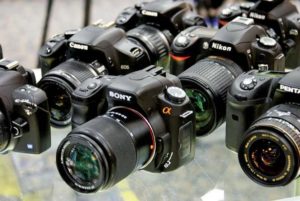
 To understand how to choose a digital camera, it is important to know the main parameters and the degree of their impact on future shooting. Such a technique is acquired in order to capture significant events from life. But the time of day and circumstances of future use, as well as the plot that you want to shoot, play a big role. Which digital camera is best suited for each situation is described below.
Content
Megapixels and their role
How to choose the right digital camera can be understood on the basis of the main indicator - the matrix of the device. It is she who is responsible for the clarity and quality of the picture. The matrix receives a reflection of the image and captures it. It consists of the smallest points - pixels. The more of them, the sharper the picture.
The era of digital cameras with 2 megapixels has begun. This made it possible to print pictures of 10 x 15 cm in size for family albums. Now in every modern smartphone there is a camera with 13 megapixels, and it is better to buy a camera with even higher settings.
From popular standards, matrices with the following values are common:
- 12;
- 16;
- 18;
- 20;
- 22;
The higher the number of megapixels, the clearer the picture will be, but also the more expensive the cost of the device. To choose the right digital camera, it’s important to consider the subject of the future shooting. For example, a home camera, bought to fix a child, will cope with its task with 12 megapixels. The picture will be clear and bright.
More powerful versions should be purchased for panoramic shots, where the distance to the subject is large and there are many small details in the frame. A look at the whole view gives only a general idea, and in order to consider the little things, you need to zoom in on the image on the monitor. It affects a small number of pixels. The image with each click on the “+” will blur more and more. High resolution, on the contrary, will allow you to clearly see the inscriptions, elements of architecture, and people's faces.
Matrix check
If you already have a model you like, it is important to make sure the quality of its matrix. Sometimes hidden defects are found in it, in the form of “burning” pixels. These are problem points that display colors incorrectly and are knocked out of the general background. For example, in the photo there is a yellow dress, and “burning” pixels create several green dots on it.
There are also “broken” pixels that shine white all the time. This will appear in dark pictures. Such defects are permissible only in a limited number - about 2-5 pieces per matrix. You can remove them only with the help of computer programs that copy adjacent colors and overlay them on the problem area.
How to choose a camera and check its matrix? To do this, the following operation is performed:
- When buying, you need to take a perfectly dark picture. If the lens has a cap, then put it on and take a picture. If there is no cover, you can go into a dark room and close the lens with a black sheet of paper.
- Then they go into the image viewing mode by clicking on the corresponding button.
- When a dark picture appears on the screen, you need to maximize it.
- After that, the viewing square of the plot moves to the upper left corner and the whole picture is systematically viewed, square by square.
- You need to look for red, green, yellow, blue, and white dots. If they are not, then the matrix is in order. If there are 2-3 of them, then the place plays a role: in the corner, where there will be fewer characters or in the center. It is worthwhile to be careful and ask for another copy.
Increase
Modern digital cameras have the ability to visually approximate the subject. This is called zoom.Such a function is useful for photographing distant elements. Closer to the picture, you can remove unnecessary buildings, people and objects from the frame, making the subject big and clear.
But here the type of zoom is important: optical or digital. The first approximates by changing the location of the lenses in the lens. The second stretches the frame programmatically. This may help with a slight increase, but a strong zoom spoils the image quality.
ISO
To choose a good device for shooting, you need to pay attention to the sensitivity parameter. It is indicated in three English letters ISO. This value can be from 100 to 3200. In practice, it is felt like this:
- You need to take a picture of the child in the afternoon in the park.
- The frame is taken at a minimum value of 100 ISO units. The picture is clear and beautiful.
- But if you try to take the same shot in the park in the evening, it will be dark and blurry. The matrix is not enough light.
- An amateur will turn on the flash to get a clear face of the baby, but this will darken the background, and it will not be clear whether this is a park or a basement.
- Increasing the ISO value allows you to get high-quality images in natural light. So, you can take pictures in the evening on the street, in a concert hall or restaurant with subdued light without a flash.
Therefore, choosing a camera, you should think about future use, and check how high the maximum value of photosensitivity of the device.
Noises
This parameter is not displayed in the equipment documentation, but has serious consequences. You can check it in only one way - by approximating the shot frame on a large-sized monitor, preferably 15.6 inches. Noises are called shades and stripes, knocking out of the main picture and having an arbitrary structure and area of location.
For example, if you take a picture of a huge rock, then bringing it closer you can see either clear grooves of a stone formation, or fine “sand”, a kind of granularity, spoiling the quality of the image. At high ISO, when the picture was taken in a dark place, such interference is acceptable. But in daylight there should be no noise. Therefore, a series of shots and their careful study on the big screen will help to make a choice.
Focusing
In digital technology, a button is pressed in two stages. The first captures the subject in the frame at maximum sharpness for a given distance, and the second captures the picture. If the focusing speed is too long (more than 1 second), this may affect the picture quality. When photographing nature (large trees or mountains) this will not occur, but when trying to photograph a moving car, long focusing will not allow us to keep track of an elusive object, and the frame will not work.
If the shooting elements are wavering (flowers, flag, swing), then a clear image with slow focusing should also not be expected. Or the picture will be clear in the end, but the right moment is missed (the person will turn his head, the subject will be hidden from view, etc.). But, if the camera quickly navigates, relative to the changing distance to the object, you get a good image.
The exposure speed also affects this. The ability to take a picture in 1/60 of a second allows you to freeze events in time. So, it will turn out to photograph a passing cyclist, a jump in the air, or a cork from a bottle of champagne.
Those who are going to take pictures of children who are notorious should choose a camera with a fast shutter speed and fast focus. Faces and actions will be clear and at the right time.
What is the difference between "DSLRs"
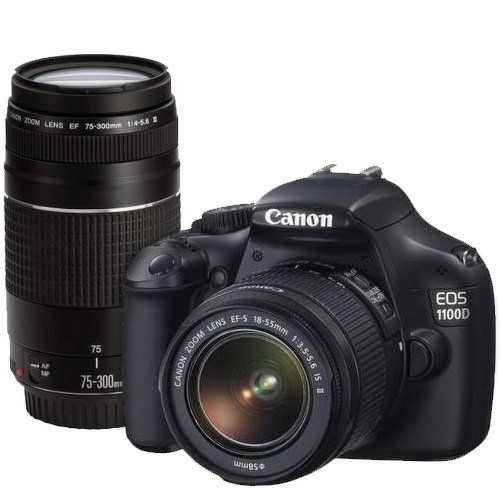
Studying the variety of cameras, you can see that SLR models are the most expensive. Does this mean that, having bought it, automatically all the pictures will be good? No! This technique has ample opportunities for the author's approach to photography, and is able to create unlike other images.The equipment has many functions and settings, but in the hands of a layman the result will be like with a conventional digital device.
Here are the main differences between SLR cameras:
- All models have removable optical lenses that naturally bring objects closer to the frame. Depending on the remoteness of the object, the optics can be changed. It is sold separately. Thanks to a set of lenses, space compression effects and original shots are possible.
- Mirror models are equipped with a diaphragm. This is a petal curtain that partially prevents light from entering the matrix. Due to this, focusing can be performed either on the whole frame, or on a separate part. On the open aperture, you can take a picture where the foreground (flower, person, car) will be clear and the background (field, building, road) blurred. Experiments with the degree of aperture cover give various results, and each frame can be interesting in its own way.
- Exposure This is the time interval between the start of photographing a focused object and tracking it until the frame is fully captured. For example, a fountain or waves can be removed at a short shutter speed, which “freezes” the moment with all the splashes. And you can put a long shutter speed (up to 30 seconds), which will leave clear all motionless objects, but will transmit the flow of water.
There are many other functions in SLR cameras, but it’s worth understanding that if you don’t want to delve into and understand the settings, then you won’t get good pictures automatically. For each situation, it is necessary to make adjustments and set the necessary parameters. Of course, in the SLR there is an automatic mode, but why then overpay for what you will not use.
White balance
If the camera is bought for a small online store at home, where you want to photograph the product and upload the image to your website, then you should pay great attention to this parameter. When shooting objects on a plain white or black background (so as not to distract buyers with a carpet in the background), it is necessary to select the subject in the frame.
White clothes on a black background will look mournful, and merge on white. To prevent this, a decrease in white color is used, as a result of which sharper contours appear between the subject and the plain background. This applies to both white on white and black on black. Only in the latter case should the value be increased.
Flash compensation
When shooting in the dark, this function comes in handy. For example, if you need to photograph a person in the evening against the background of a building. When the flash is on, only a person with a lit face and a dark spot at the back will be visible. Without a flash, nothing will work. Therefore, correction of the auxiliary light is necessary, which illuminates the foreground, but at the same time allows you to "see" the rear objects of the camera. The darker the street, the greater the negative flash value you need to set.
Burst shooting
Moving objects or people quickly change position. Even with good focusing speed, getting the desired frame is difficult. If the action can be repeated (diving, trick), then this is done up to 20 times, until you get that one successful shot. But, if the action is unique (finishing athletes in competitions), then the moment may be ruined.
The burst function is useful here - this is taking several shots at intervals of tenths of a second, with a single press of the shutter button. Of these frames, you can choose the most successful. The larger the number of frames per click in this mode, the higher the chances of shooting an interesting moment. This indicator for various models ranges from 3 to 5 frames.
Battery
The capacity of the energy source plays an important role when photographing on a camping trip or other remote location from the mains. When you need to remove a key moment, and the device just does not turn on, it will be a shame. Of course, there are batteries for recharging, but they need to be bought additionally.
Battery capacity is measured in miles ampere hours. In the documentation, it looks like mA / h. Some cameras have indicators of 750 units, which is very small and the camera will often signal a low charge. Values from 1000 mA / h are considered normal.
Total
There is no camera model that works for everyone. When choosing, you should be guided by the future intended use of the type of shooting objects, time of day, and other circumstances. It is necessary to take into account the weight of the camera, the ability to install additional memory, as well as the convenience of the buttons. Then everyone will choose a model for themselves.


