 The issue of organizing comfort in a home is close to everyone. The main or additional heating in the rooms, built on heaters of different classes, is not uncommon. Therefore, questions about which type of device is better sound almost constantly. We consider the widest range of devices - from cheap, small and noisy fan heaters to ceiling gas units. Most often, people are interested in which heater is better - oil or infrared, since it is these segments of household appliances that have earned a reputation as convenient, reliable, widely represented in the mass market.
Content
Define the target device segment
Separately, it is worth considering the class of devices of complex action. Often questions arise, which is better - quartz or infrared heater. Both of these devices are positioned as sources of thermal radiation. However, this is not a true assessment.
To answer exactly which is better - a ceramic or infrared heater, you need to know the type of device. For instance:
- infrared heaters can use a ceramic plate or a block of sintered silica sand as an emitter. Heating is made by TEN, it is sealed with surrounding material and gives off heat very evenly. The plate or block is heated to a high temperature, radiating heat;
- quartz and ceramic heaters can be made in the form of wall or floor models. In this case, they work just like oil heaters. A plate or a sintered block of sand is heated to a low temperature; convection is the main method of heat transfer.
In order not to get confused in the great variety of options for using the same material, we will consider precisely devices that transmit heat by radiation. They use a block with an element that is heated to a relatively high temperature. At the same time, the assessment of which is better - a fan heater or an infrared heater, clearly speaks in favor of the latter. A device with a ceramic or quartz plate does not make noise, dust does not burn on it, the level of reliability is very high.
Debunking Myths
Immediately debunk the main myth: air drying. None of the oil and infrared heaters destroy moisture. To say which one is better is possible only by subjective sensations. Everything works as follows:
- the amount of water vapor in the room is a constant;
- moisture activity in air depends on temperature. To understand this saying, one can imagine two glasses. In one boiling water, steam comes out of it, in the other - cold water and nothing happens above it;
- with increasing temperature, the relative humidity index drops. With the same amount of steam in the air, a person feels dry;
- the effect of oil and infrared heaters on moisture in the air differs only in intensity. The latter (depending on the type) has a high emitter temperature and, therefore, literally evaporates moisture from the surface.
The effect of humidity is especially noticeable when considering a quartz heater. The appliance begins to crackle or make a soft rustle. All this is a consequence of water vapor entering a heated radiator.
The second myth is energy consumption. Modern oil coolers and average infrared slightly differ in terms of efficiency. The best radiating type device built on ceramic elements today shows about 90% of the conversion of electricity to heat.When measured over a long period, oil radiators provide 80 to 85% efficiency coefficient.
It is easy to understand that for heating a certain amount of air inside the room, as well as for simultaneously raising the temperature of all objects in it, both the infrared heater and the oil heater must give the same amount of heat. Therefore, the myth of the economy of a particular solution is nothing more than the fantasies of people with a liberal education or marketers.
The third myth is the obligatory odors. If you do not focus on products from the lowest price group, where infrared heaters with poor insulation and oil lubricated in all convenient places are not uncommon, a reliable and efficient heating device does not smell. Dust does not burn on the surface of the radiator, similarly - it does not fall into a well-insulated quartz heater. The only time that the appliance can emit odors is when it begins to operate. Burnout of grease, dust on the contacts, some evaporation of paint coatings or compounds are always observed.
Looking at the foregoing, we can consider which heater is better - oil or infrared, from the standpoint of a rational host. A direct comparison will be made, the acquisition cost, convenience and safety of use, impact on the microclimate and placement requirements, the price of constant operation, repair costs will be evaluated.
How it works
To understand what is best in appliances, as well as some reasoning and evaluation, you need to know how the oil and infrared heaters work. The design features and the method of heat transfer in some cases dictate both the operating rules and the principles of placing devices in the room.
-
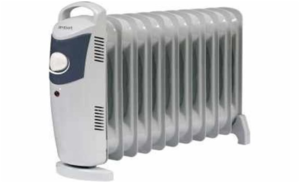
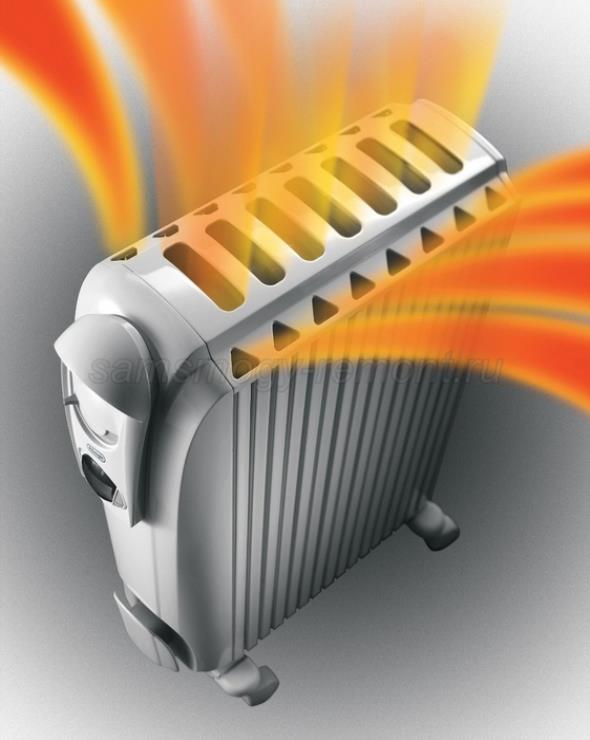
- Oil heater. As the name implies, transformer oil is used as the coolant of the device. This is a special composition that does not cause corrosion of heating elements, does not make rubber seals rigid, has zero conductivity and is thoroughly cleaned. The coolant is in a sealed volume. Depending on the design of the heater, it can be one large flat panel or several small ones. Heating is carried out by a heating element in the lower part. The oil cooler provides universal emergency protection. A physical fuse controls pressure and temperature. When the heater enters emergency mode, a special unit completely stops operation, interrupting the power supply circuit, preventing the oil from breaking the radiator. The heating intensity is smoothly set by a mechanical thermostat, in which there is a bimetallic plate. The operation of the controls and the adjustment of the oil cooler is accurate, the system requires no maintenance, spare parts are available and cheap.
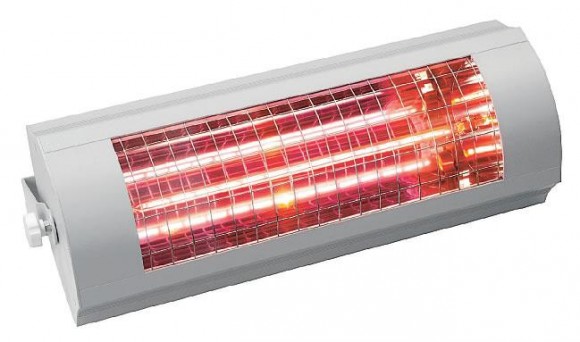
- Ceramic, mycothermal, quartz or carbon heater. Infrared heaters are built on different types of emitters. In a nutshell, which is better - a carbon or classic infrared heater, is simply impossible. They have one principle of operation, however, different types of emitters have their own characteristics. For example, a bulb with a carbon filament burns with visible reddish light, a halogen lamp emits golden and is coated with special compounds for protection, devices with ceramic plates, as well as heating elements inside a solid block of material (quartz) work only in the invisible spectrum. The operation of an infrared heater can be compared to spotlight. He has an angle of effective energy dissipation. Roughly speaking, the device acts by radiation on everything that is in its field of view. If we are talking about heat, then the infrared heater is like a bonfire. Some people don't like the mechanics of his work. They describe their feelings with the following phrase: the face is hot, and the back is freezing.Actually, this fully reflects the method of operation of the heat emitter. The operation of expensive models is regulated using external devices. Thermal sensors located in the room give a command to turn the heater on or off. Cheap models are equipped with simple controls that only switch the number of heaters without monitoring the temperature in the room.
From the above it follows: an oil heater is more convenient in terms of adjusting the intensity of heating. At the same price of devices, an infrared device has step-by-step switching: one emitter, two, three. Oil allows smooth adjustment inside each stage, which allows you to finely adjust the heating mode.
Direct Technology Comparison
We turn to a direct comparison of oil and infrared heaters.
-
- Cost of acquisition. The price of the devices is very different. For the same price, you can purchase a high-quality and convenient oil heater, and from the infrared segment, only devices on a carbon fiber will be at the disposal of the buyer. They emit visible light, are afraid of moisture, the bulb of the emitter has a limited service life of about two years. To get the convenience of control and the level of reliability, like an oil one, you will have to pay a lot of money for an infrared device. For example, oil heaters with three modes and infinitely adjustable for heating 22 square meters cost about a couple of three thousand rubles, for this money you can buy only carbon fiber, with a minimum of adjustments, infrared emitters with an allowable heating area of 10-12 square meters . m. The next in the price segment halogen infrared heaters are already more than 10-15 thousand rubles for a model designed for a room of 15-20 squares, but with a simple control panel. As a result, according to the criterion of cost of acquisition, the positive difference between oil devices is obvious, and they win a resounding victory.
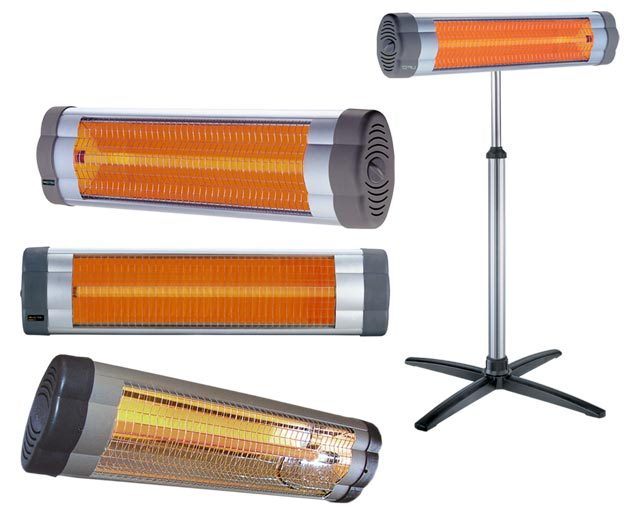
- Convenience of placement. Oil and infrared heaters maintain parity according to this evaluation criterion. There are many versions of devices associated with the mechanics of work. Heat-transferring oil heaters can be placed on the floor or attached to the wall. Similarly, infrared devices are available in versions on legs, uprights, for wall mounted, ceiling, corner mount.
- Operational safety. If you take into account all factors, namely the possibility of children's access to heated parts, reaction to water, fire safety and injury risk, an oil cooler looks more attractive. The main defeat of infrared - they are able to cause ignition of objects located within 0.5 meters from the emitter. Carbon and halogen models are sensitive to water - if it gets on the flask, the device will fail. The oil cooler is simple and quite safe. Nothing terrible will happen if you cover the modern model - the device just stops cooling and gives off heat, the oil temperature control system will not allow an accident. Splashes of water will also not harm the heater. The temperature of the surface of the oil cooler can be quite high, but for a room with children it is easy to purchase a special version, in which the fins are protected by a tubular frame, which excludes easy access to them. The only condition that must be observed is that the oil cooler must be in an upright position. However, the infrared radiator also has installation requirements.
- Cost of operation. The level of recurring costs clearly indicates the use of an oil cooler. It works for years without replacing parts. For infrared from the same price segment, at least you have to buy a new bulb or lamp after the end of its life.
The listed evaluation criteria are sufficient to consider the application of this or that device in the apartment.They show that the oil cooler is definitely better. However, this is true only under certain conditions.
We suggest you read the article on how to choose the safest heater.
Fields of application of oil and infrared heaters
Oil and infrared radiators are equal in terms of heating efficiency and the effect on the indoor climate. But these classes of devices have different segments of application. Let us explain with a concrete example:
- in the conditions of a room of a residential building with average ceilings of 3 meters and an area of 20-30 squares, an oil heater will win. It is enough to put it in a place where it will not interfere, and enjoy the warmth in the room. The infrared device will annoy the flaws. Radiation from a short distance will dry the skin, objects nearby will heat up, while the upholstery of the furniture may fade. The distances in the average room are such that the infrared heater is difficult to arrange so that it does not interfere and works efficiently. A room with a small amount of furniture is acceptable, then the radiator can be placed or suspended somewhere in the corner so that it has a maximum of coverage and distributes heat evenly;
- in a room with high ceilings, between the oil and infrared devices, a struggle for the owner’s wallet will unfold. If we are talking about a room with an area of up to 30 squares, both classes of devices will show similar results. But at the same time, the infrared heater has more freedom. Ceiling or corner placement models work well: several low-power devices distribute heat very evenly over the entire area of objects in the room, working quietly without creating inconvenience. But the cost of such a decision is great. Oil heater is much cheaper;
- in large rooms, especially for public and industrial use, infrared heaters win a landslide victory. Kindergartens, halls, reception rooms, offices are well served ceiling models, while it is possible to prudently arrange heat zones. Devices placed under the ceiling are not accessible for children, it is difficult to pour water on them, the radiation is evenly distributed over a large area, without creating inconvenience. Oil radiators under the described conditions will only get underfoot and create problems, especially when it comes to heating a kindergarten or premises with a certain traffic of people. The wall options placed around the perimeter of the huge hall will not be able to evenly warm up the entire volume of the room.
The conclusions from the above thoughts are simple: for each room you need to make an individual assessment of the usefulness of a heating device. One thing is for sure: under equal conditions, with the same number of pros and cons of use, oil heaters will benefit. They are much cheaper, unpretentious, easier to connect, more convenient to adjust, do not require periodic replacement of parts.


