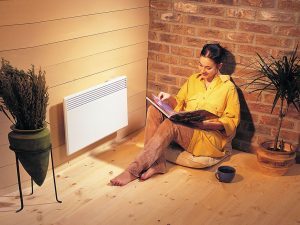
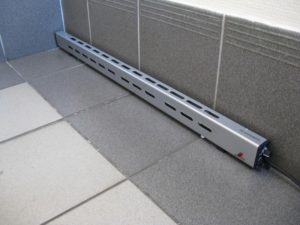
 A skirting heater is a good alternative to standard batteries. The compactness of the system does not affect its power in any way; it can well replace central heating. Due to the physical properties of hot air, the room warms up evenly. Skirting heater is best used for offices, loggias, hotel rooms and country houses. Often they are used in verandas, greenhouses.
Content
Device and classification
All skirting-type heaters can be conditionally divided according to three signs: what material they consist of, how they are heated, and how energy is transferred.
The choice of material largely determines how fast the room will warm up. The following types of convectors are available:
- copper heat exchangers - give off heat much faster;
- steel heaters - are characterized by lower heat dissipation, therefore they are cheaper;
- bimetallic - copper pipes with aluminum fins are used in the construction.
Heat the air convector can using two sources:
- water - the design of a water heater is a collector with plastic pipes brought to it, covered by a box of stone, metal or plastic;
- electricity - the basis of such a heater is a copper spiral, which is connected to the network, and the temperature is regulated by a thermostat.
The design of the water heater is sealed with plumbing linen, a special thread. The permissible temperature inside the convector is 50 degrees, exceeding the norm threatens burns if accidentally touched.
Electric convectors come in two types: electronic and mechanical. According to the installation rules, the socket should have about 16 amperes.
By the method of energy transfer devices are:
- infrared;
- convection.
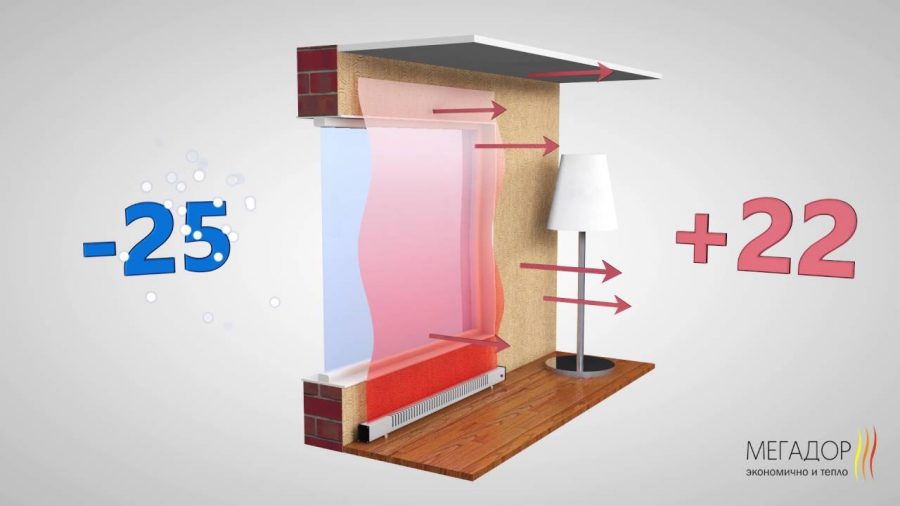
In a convection heater, heating occurs using a radiator, in infrared - using a spiral that transfers heat to the metal lining. In this case, the temperature of the second is much higher and is 60-80 degrees. Convection creates a heat shield between the walls. Such a "screen" perfectly protects from the cold.
Liquid convectors
In their arrangement, liquid heaters are not much different from traditional convector heating. Hot water enters the collector, and then into the radiator. Such a system is much more economical than underfloor heating, which takes a lot of electricity to work, and consists of:
- heat generator;
- radiator - copper pipes in the box;
- collector required for energy distribution (consists of two pipes with holes for the input and output of the coolant;
- pipes of small diameter, performing the function of a sleeve.
Antifreeze is most often used as a heat carrier. The main risk of this system is a low resistance to water hammer, which is why corrugated pipes are used. Unlike an electric skirting board, a water board must be installed with the help of a professional.
Electric convection heaters
The electric heating system includes:
- heat control system;
- insulated power cable;
- heaters;
- radiator;
- heat generator;
- thermostat.
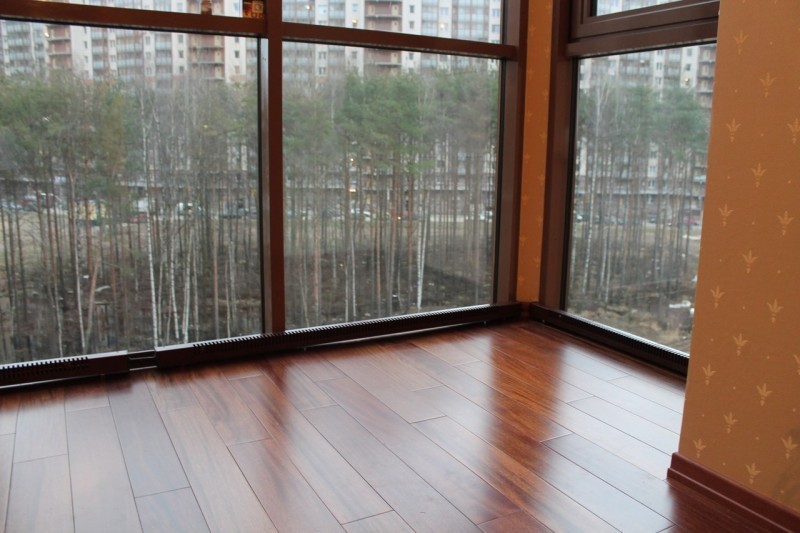
A plinth heater of this type heats the air due to an electric heater and a power cable. Temperature sensors are placed at a level acceptable to the eye. This skirting board can be installed on absolutely any type of surface. The system is adapted for all types of heat generators.However, it should be remembered that electrical equipment can easily fail due to overvoltage, so a separate outlet is required for normal operation.
Infrared heaters
If water and convection heaters heat the air, then IR systems heat objects. Long waves of radiation are perceived by the body as a stream of heat, while the sensation of warmed air comes immediately. This type of heater consists of several parts:
- steel case;
- reflector;
- heater - ceramic, carbon.
The carbon heater is a small ceramic tube under vacuum, inside which is a carbon thread. Such parts are very durable.
IR heaters can be made both in a stationary version, and mobile.
Advantages and disadvantages of the skirting type heater
Users note the following advantages of such a heating system:
- compactness - the convector will perfectly fit into any interior, since it is similar to a plinth;
- protection against humidity - thanks to the placement around the perimeter, the humidity in the room does not increase, which helps to prevent the appearance of fungus and mold;
- heat is well kept indoors;
- air heats up quickly, and the cost of convection is modest, i.e. heating is economical;
- when installing the skirting system, you do not have to splurge on warm floors;
- installation of equipment does not take much time and does not require special training.
The disadvantages of baseboard heaters include:
- the high cost of modules (the average cost of a meter is about five thousand);
- with the help of such convectors it is impossible to heat a large area;
- heaters with aluminum pipes warm the room very slowly;
- it is impossible to install the system on part of the wall, only around the perimeter.
Thus, skirting convectors are slowly replacing the traditional heating system.
System installation: the nuances of installing a skirting system
The process of installing tiles takes place in several stages:
- the frame is mounted first;
- modules are formed into one system using fittings;
- the system is connected to the collector;
- sealing check;
- installation of a decorative element.
When installing the skirting system, the following must be considered:
- the optimal height for installation is 15 mm, since a smaller clearance will reduce the efficiency of the system;
- it is forbidden to install convectors behind upholstered furniture, since it is drying up and takes all the heat onto itself;
- you can not plug them into a standard outlet, as they consume a lot of energy;
- the line for the electric convector must provide grounding and the ability to automatically shut off;
- when installing an infrared heater, it is worth paying attention to the presence of a thermostat, which is better to provide with program control.
As for other points, installing a skirting system is by no means a complicated process, especially when it comes to electrical models - just select a separate power branch. Installing water heaters is akin to installing a standard battery.
Selection rules
When choosing a skirting heater, several points should be taken into account:
- focus on the size of the room;
- take into account the power of the convector, temperature capabilities;
- preference should be given to adjustable systems.
A good option is the Megador series of heaters, they are inexpensive and are perfect for heating a small kitchen or loggia. More reliable and powerful models - "Dimplex" and "Noirot" will cost much more.
Most suitable for home infrared ceiling modelswhich operate in a larger range in conjunction with floor lamps. You can not take an industrial model for the house - it is designed for high ceilings. The cost of infrared convectors is higher, especially when it comes to a carbon heater.
Thus, skirting-type heaters are perfect for heating small rooms and even allow you to save some.In addition, such a system perfectly retains heat. However, it is worth remembering that baseboard convectors are not suitable for production shops and large residential buildings, they can only be used in small rooms or off-season, when the weather presents surprises before the heating season.